
The Taste of Decay
Food Chains of Empires
Some dishes outlive empires, surviving currency changes, gods, navigation systems, and even the algorithms sorting our reality. Testi kebabi is one of them.
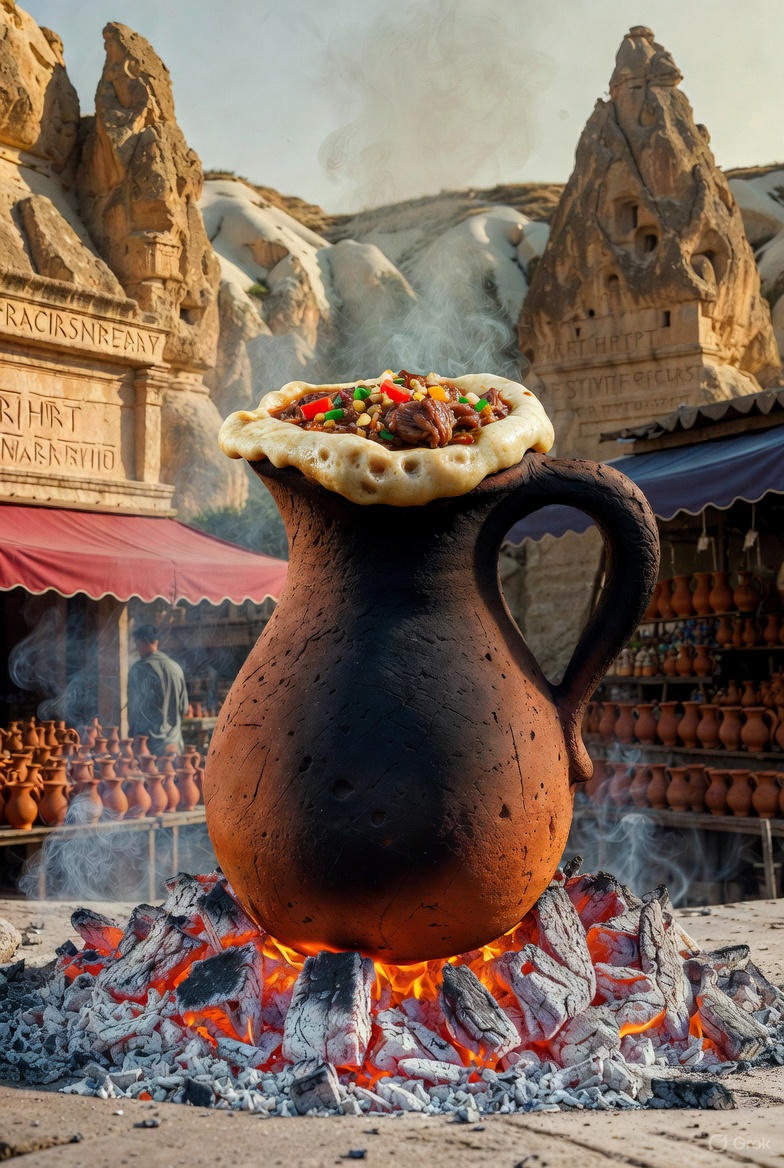
A clay pot sealed with dough looks like something excavated from an underground shrine rather than pulled from a restaurant oven. Cappadocia is a place where ceramics absorbed meaning long before people learned to say, “QR menu, please.”
When the Hittites were inscribing their incantations in cuneiform, they were also firing their first cooking vessels. When the Romans built their fortresses, they too ate and drank from clay. When the Seljuks dragged their caravans through these valleys, the pots rode with them. When we arrive today — the pots have already been waiting for a while.
Testi is archaeology disguised as dinner. And if you trust the words carved into the tuff, Cappadocia hasn’t changed in thousands of years. Only the carriers have: from stone to ceramic, from ceramic to menus, from menus to Instagram Stories with the sound of shattering pottery.
On the Teeth of Civilization
Inside the pot — meat, vegetables, spices, all simmering for hours until they become something like a hot monologue about impermanence. The taste is thick and dense, as if it were scraped from the inner walls of an ancient tandoor. No sauce tries to soften it — on the contrary, the dish seems proud of its “uncultured” nature.
You inhale the aroma and understand: this isn’t just stewed lamb. It’s a dish that collapses into layers of reality: first you, then the steam, then the hot strands of meat, then the memory that everything in the world falls apart — and somehow this comforts you.
The moment the waiter brings the glowing pot, takes a little hammer, and strikes it — it divides life into “before” and “after” the hit.
Before — anticipation. After — food. And between them — a small ritual of destruction.
Souvenirs of the Apocalypse
In the tourist market, everything once sacred turns into merchandise. Tiny clay pots are sold next to magnets: take it, tourist, carry home a fragment of the ritual. And while you choose which souvenir best matches your kitchen, the vendors smile as if they already know you’ll buy something unnecessary.
Testi kebabi has become a survival attraction for the postmodern stomach:
— break the pot,
— film it,
— donate your dinner to a couple million servers to store until the end of time.
You think you’re buying the taste of the region. The region thinks it’s selling you its copy.The market knows you’re both mistaken.
Digesting the Impossible
When the plate is empty and only shards remain — a kind of calm arrives. Because the impossible has already happened: you broke a vessel that, by mythological logic, should not be broken.
And if something this ancient can be destroyed by you — then you, too, may not be that important, and strangely, this frees you.
Testi kebabi is a dish that teaches you to accept the world’s impermanence better than any philosophical treatise. You eat meat, but in truth — you swallow the concept of decay, which for some reason smells like rosemary and laurel.
How Did We Get Here?
Where to eat without dying of gastronomic disappointment: Avanos / Ürgüp / Göreme — the best places where testi is made the old way, not the TikTok way. Look for restaurants where the pots are truly sealed with dough, not mimicked for show.
If the pot is served too clean, without soot or fire marks — run: that’s marketing, not magic. And remember: real testi kebabi is not cracked beforehand. The strike must happen in front of you. This matters more than salt.
#VoiceOfRuins #TasteOfDecay #Cappadocia #TestiKebabi #gastronomy #TurkishCuisine #localfood #rituals #culinaryarchaeology #market #tourism #food


Our Telegram-channel: Voice Of Ruins https://t.me/Voice_Of_Ruins
Our Instagram: Voice Of Ruins https://www.instagram.com/voiceofruins/
Our group on Facebook: Voice Of Ruins https://www.facebook.com/share/g/16aitn9utM/
Our site: Voice Of Ruins https://www.voiceofruins.org
More Points On The Map



Leave a Reply