
The Call of Emptiness
Ihlara was a valley long before it became a route. Long before signposts, entrance tickets, and the phrase “natural landmark.” It did not wait to be looked at. People lived in it.
No one came here seeking revelations — they came to solve problems. Where to hide. Where to get water. How to survive winter. How not to be found.
When Stone Was a Home
The valley functioned. Not as a symbol, but as a system.
The tuff cliffs were soft — they could be cut with simple tools. Once exposed to air, they hardened, becoming walls that held warmth in winter and coolness in summer. It was architecture without architects. An environmental answer to historical pressure.
People did not live “in caves,” but in spaces. Rooms, corridors, storerooms, lamp niches, smoke vents. Nothing accidental. Everything scaled to the human body, to movement, to shade.
A home here was not private space. It was an extension of the cliff. And the cliff was an extension of the valley.
Water That Made Life Possible
The Melendiz River is not scenery. It is the cause.
A permanent watercourse in an arid region means life without nomadism. Gardens, fruit trees, mills, channels. Traces of all this are still readable — if you look not as a tourist, but as someone who needs to live here for at least a year.
The water was always loud. That noise concealed conversations, footsteps, prayers. And it made the valley safer than the plateau above.
Churches Without Ceremony
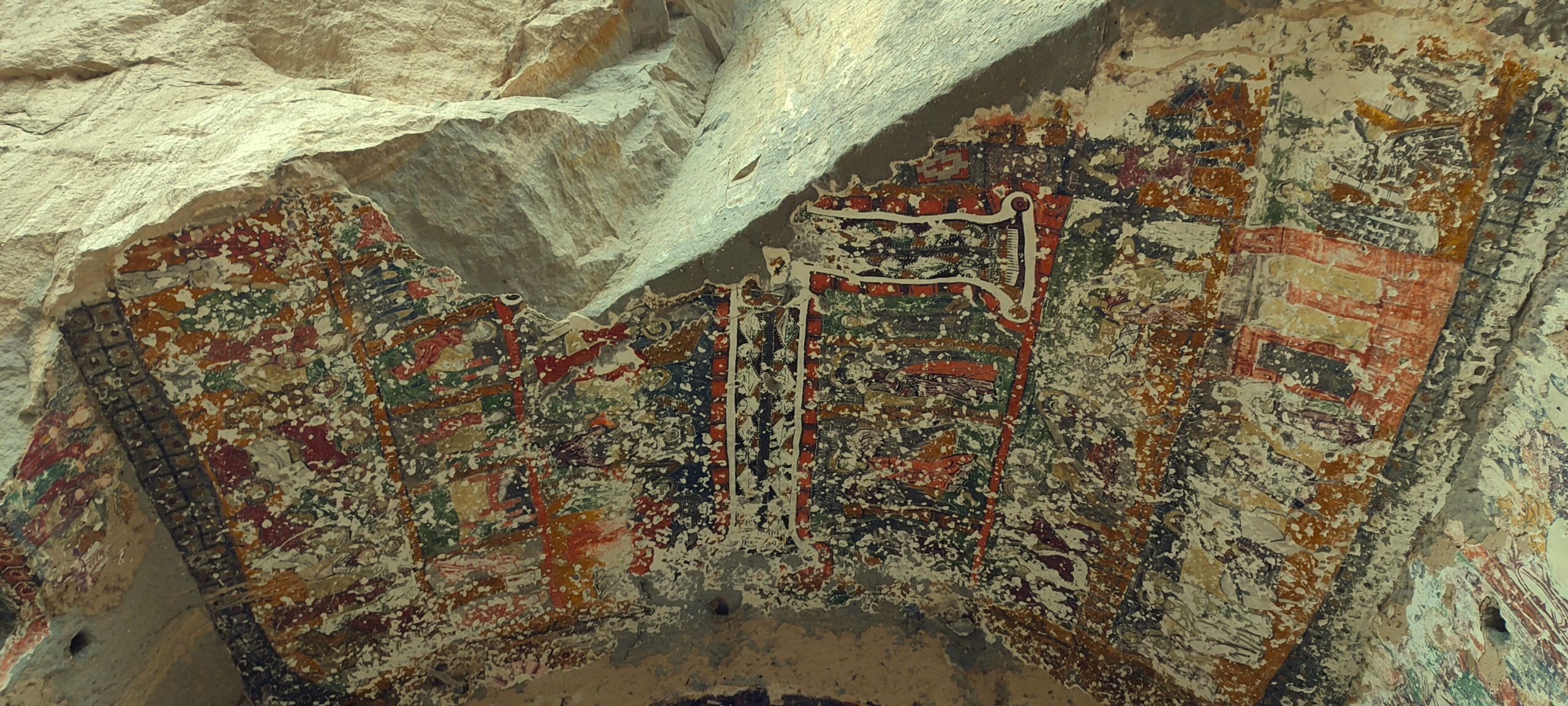
The cave churches of Ihlara were not “holy places” in the usual sense. They were functional. People prayed, hid, taught, copied texts, waited. The frescoes did not decorate — they recorded. Stories, figures, scenes meant to be held in memory when the outside world turned hostile.
Most images were simple. Because devotion was not to aesthetics, but to survival.
Soot on the walls is not a trace of time — it is a trace of life. Candles. Lamps. Smoke. People breathing here every day.
The Valley’s Rhythm
Ihlara had a rhythm unlike any city’s. Morning began with water. Daytime meant work below and cautious watching of the canyon rim. Evening meant retreating into the rock.
The valley taught people to stay quiet. Not to stand out. Not to leave traces.
It shaped a type of person who did not expand outward, but went deeper.
A Refuge That Worked
From the 4th to the 13th century, Ihlara was part of Cappadocia’s defensive network. Not a fortress, but a space of avoidance.
Battles were not fought here. People disappeared here.
Those who came from above lost visibility, speed, confidence. Those who lived below knew every path, every bend, every sound.
The valley did not wage war. It simply endured everything that happened above it.
When Life Left
Ihlara did not die. It became unnecessary. Roads changed. Threats changed. Forms of life changed.
People moved upward — closer to trade, to the state, to noise. And the valley remained with what it had accumulated: empty rooms, erased faces, traces of footsteps that are no longer repeated.
Echo of Function
Today Ihlara feels like a place for reflection. But once it was a place for decisions.
No one searched for meaning here. Meaning was postponed.
And perhaps that is why the valley still feels alive: it remembers humans not as observers, but as participants in a process.
Life between the cliffs was not beautiful. But it was possible. And sometimes that is enough for a place to remain in history.
#VoiceOfRuins #CallOfEmptiness #Ihlara #Cappadocia #history #everydaylife #cavecities #MelendizRiver #monasticlife #humanAndEnvironment #lifebetweenthecliffs


Our Telegram-channel: Voice Of Ruins https://t.me/Voice_Of_Ruins
Our Instagram: Voice Of Ruins https://www.instagram.com/voiceofruins/
Our group on Facebook: Voice Of Ruins https://www.facebook.com/share/g/16aitn9utM/
Our site: Voice Of Ruins https://www.voiceofruins.org



Leave a Reply