
Exhibits of Survived History
Hall of the Survivors
Antiquity rarely dies beautifully. It does not leave to music, does not write a will, and does not explain why it vanished. Most ancient cities of Mersin dissolved exactly this way — without a final scene, without a caption reading “end of an era.” Many of them disappeared long before Mersin itself even existed. They were dismantled into building stone, buried beneath modern districts, washed into the sea, or simply forgotten — the way old system passwords are forgotten.
These five ancient cities are today the best preserved and the most “Instagram-friendly” in the region. Yet in their own time, they were not especially remarkable among their neighbors. They simply survived. Not by design. Not by merit. In some cases, terrain helped. In others — poverty. Elsewhere — a lack of interest. This is not a ranking of greatness. It is an inventory of survival. A contrast between what is still standing and what no longer exists even as an outline.
Inventory of the Survived
Elaiussa Sebaste
An imperial coastal city built as a demonstration of loyalty to Rome and a taste for order. The theater faces the sea, the baths follow every canon of late Roman comfort, the streets read as a plan rather than as ruins. It is easy to imagine movement here — of people, power, money. Elaiussa creates the illusion of a “normal” ancient city, with a center, a periphery, and a logic of growth.
Against the backdrop of Mersin’s other surviving cities, Elaiussa appears almost prosperous. If Uzuncaburç is stone forgotten by time, Elaiussa is stone that time carefully stepped around. Compared to Anemurium, there is less sense of the edge here and more of a display case.
Anemurium
A city built as if it had known in advance about its own solitude. Located on a windy cape, it was oriented not toward controlling territory, but toward surviving at the frontier. The necropolis here is nearly equal in importance to the city itself — dense, extended, insistent. It is not decoration; it is structure.
Unlike Elaiussa, Anemurium does not create the illusion of life continuing after people have left. It is honest in its abandonment. If Elaiussa feels like a pause, Anemurium feels like an ending without applause. In atmosphere, it is closer to Kanlıdivane — but without mysticism. Only geography and wind.
Kanlıdivane
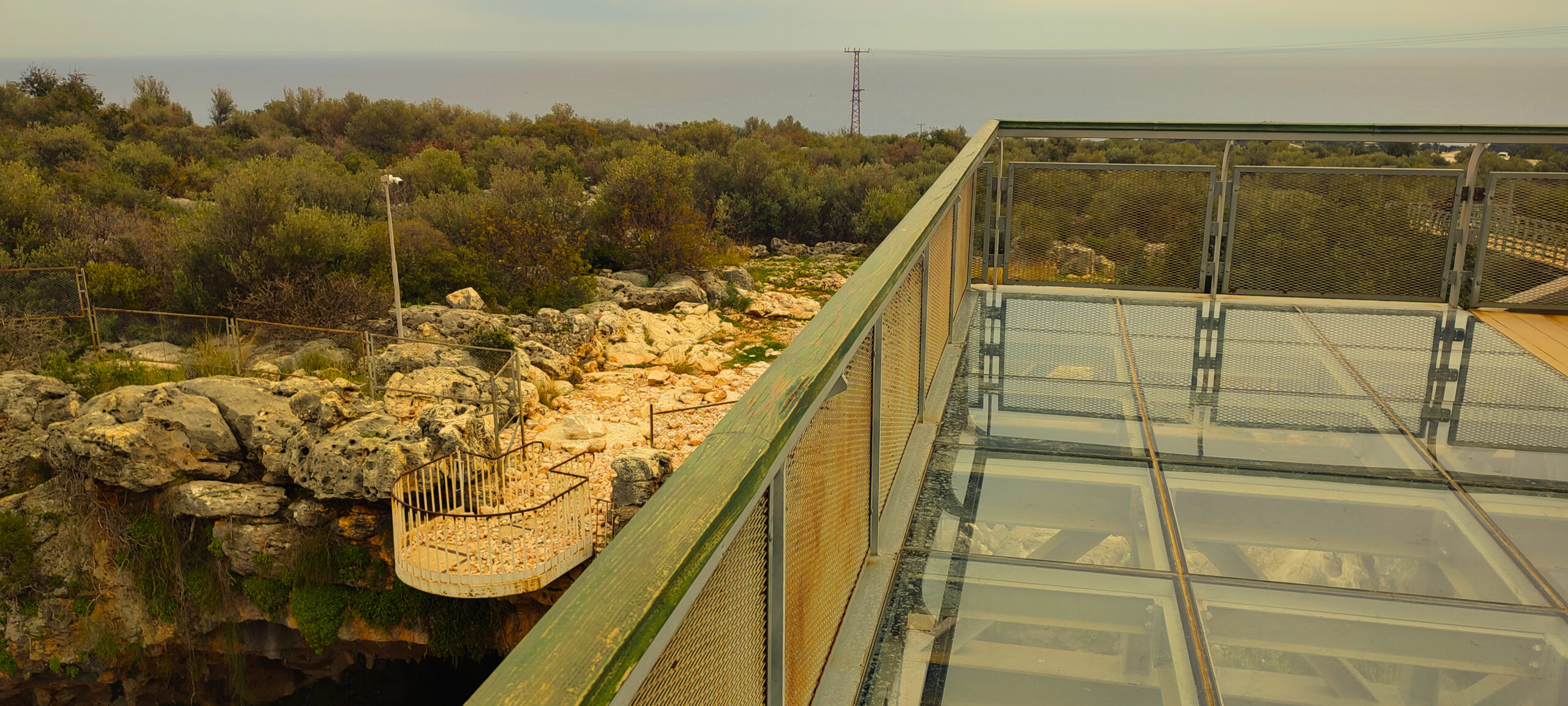
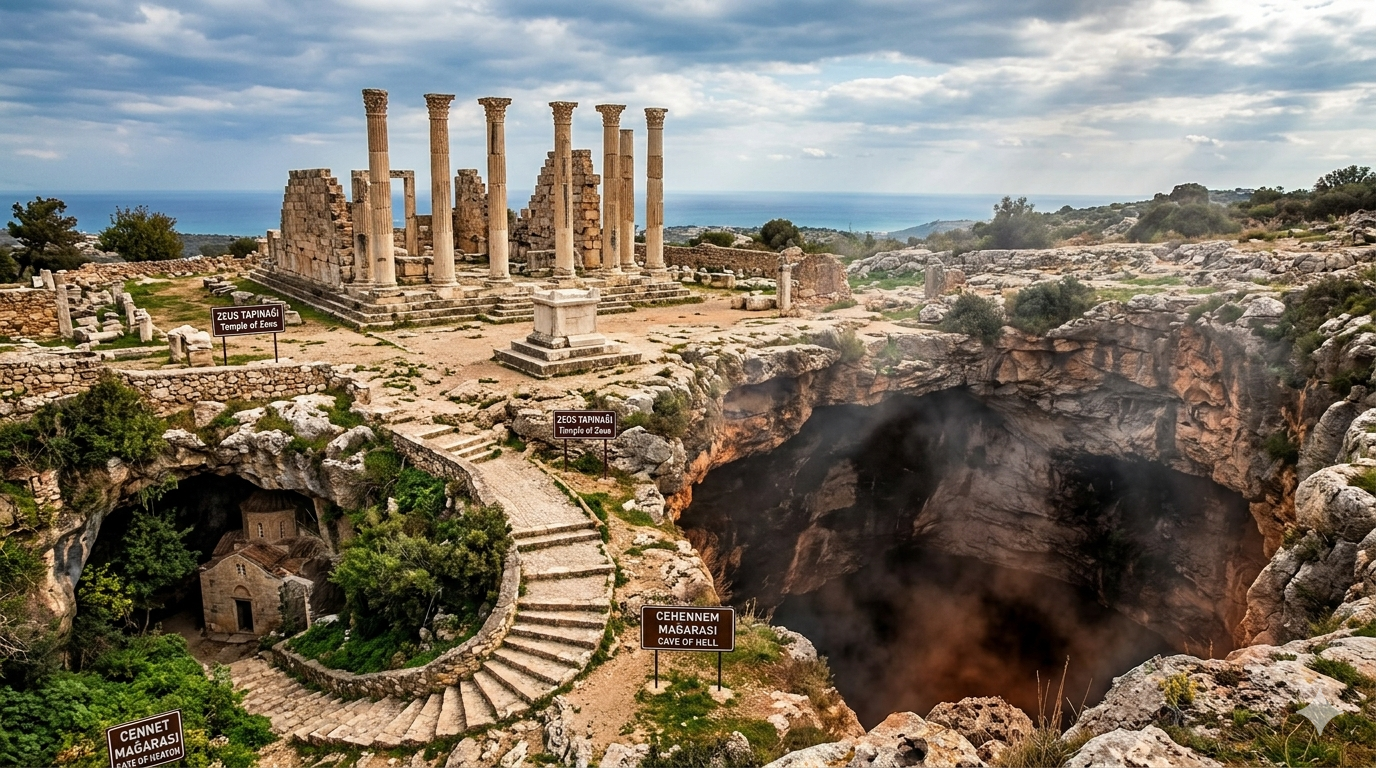
A city whose central point is emptiness. A karst sinkhole shapes not only the space, but the logic of the place itself: everything is built around the void. Temples, tombs, residential structures do not dominate — they balance. Architecture here is secondary to landscape.
If Uzuncaburç demonstrates the victory of form over time, Kanlıdivane represents a compromise between form and chaos. Compared to Soli-Pompeiopolis, where the city is erased by the sea, erosion here happens vertically — downward. This is a city that is not collapsing, but slowly being drawn into the sinkhole’s emptiness.
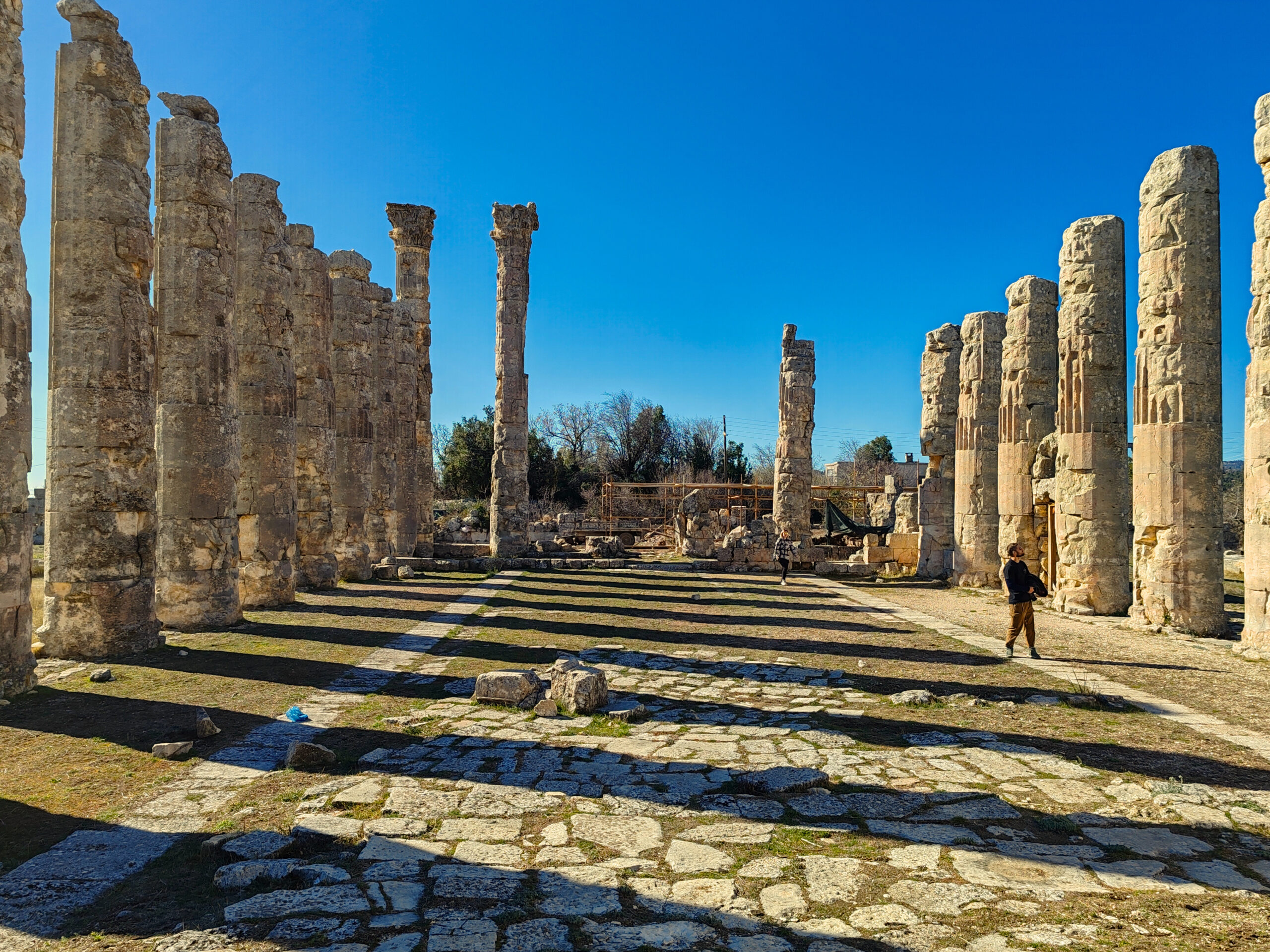
Uzuncaburç (Diocaesarea)
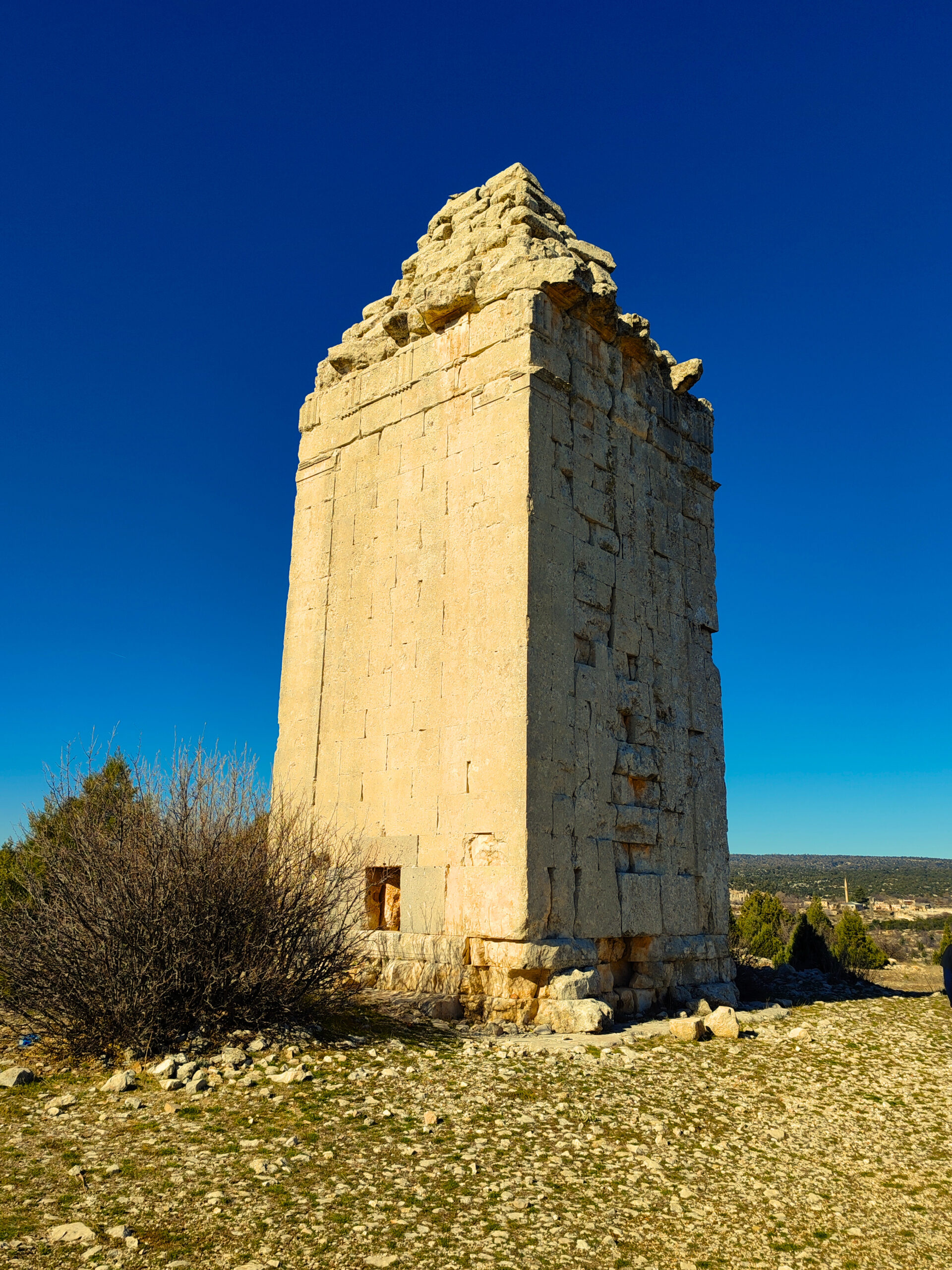
A mountain city that looks as if it was sealed immediately after abandonment. Temples, colonnades, gates, squares — everything remains in place, without signs of panic or catastrophe. The stone here is not broken; it is paused.
Against the other cities, Uzuncaburç feels almost incorrect. It is too intact. Compared to Anemurium, where the horizon dominates, everything here is vertical and composed. Unlike Elaiussa, there is no sense of port or movement — only structure and silence.
Soli–Pompeiopolis
A city reduced to a single axis — a colonnaded street by the sea. Everything else has either disappeared or lies hidden beneath modern layers. This is not a complex, but a fragment left behind as a reminder of the scale of loss.
If the other cities survived whole or nearly whole, Soli survived as a warning. Compared to Kanlıdivane, where emptiness is embedded in the city, here emptiness is the result of erasure. It is the most vulnerable — and the most honest — exhibit in the list.
Wear of Memory
Elaiussa Sebaste — carefully cleared, partially conserved, gradually becoming an open-air museum. The danger lies in excessive “logical” routing.
Anemurium — minimal restoration, maximum wind and solitude. The stone erodes slowly but without supervision. Few tourists, almost no control.
Kanlıdivane — high level of preservation, but constantly balancing between the sacred, the touristic, and the attraction. The abyss draws more attention than inscriptions.
Uzuncaburç — a textbook example of survival without intervention. And that is precisely what makes it vulnerable: any active “improvement” could prove fatal.
Soli–Pompeiopolis — the most alarming case. Part of the city is already underwater, part lies beneath modern houses. The columns stand like a warning no one reads.
Shadows at the Edge of Reason
Why these ones? Not because they were stronger. Not because they were more important. They survived because they were inconvenient: distant, windswept, perched over cliffs, outside the trade routes of the modern world.
Survival here is not a reward, but a side effect of neglect. Climate helped. Terrain protected. Lack of investment saved them. Where there was no money and no ambition, the stone was left alone.
The paradox of Mersin’s antiquity is that it was preserved not by attention, but by its absence.
How to See This Today
All five sites are located within Mersin Province.
Elaiussa Sebaste and Kanlıdivane lie in the Erdemli area and can be visited in a single day. They are accessible both by car and public transport; minibuses and buses running between Silifke and Mersin are suitable. Entry to Kanlıdivane is paid.
Uzuncaburç is located in the mountains near Silifke. It requires a car and time, but rewards visitors with silence. Entry is paid.
Soli–Pompeiopolis lies within modern urban development. It requires careful attention and the abandonment of illusions. Columns line a fenced road, while excavations continue on the mound.
Anemurium is the most remote site, near the provincial border. The best time to visit is early morning or toward sunset. It can be reached by Antalya–Mersin buses. Entry is paid.
Focus not on postcard views, but on cracks, shifts, and voids. These are what disappear first.
Echo of the Display Case
Contact with these cities does not produce a sense of discovery. Rather, it produces a sense of being late. You arrive too late — but still not last.
They do not ask for attention. They do not demand interpretation. They simply stand — like equipment from an old system that was shut down long ago, but for some reason never dismantled.
And in that standing there is a strange comfort: the world can disappear as many times as it wants, but something always remains. Not the best. Not the most important. Just — what survived.
#VoiceOfRuins #ExhibitsOfSurvivedHistory #Antiquity #Ruins #Archaeology #Mersin #Cilicia #AncientCities #AncientArchitecture #Stone #Memory #Oblivion #Empires #MediterraneanHistory #ElaiussaSebaste #Anemurium #Kanlıdivane #Uzuncaburç #SoliPompeiopolis


Our Telegram-channel: Voice Of Ruins https://t.me/Voice_Of_Ruins
Our Instagram: Voice Of Ruins https://www.instagram.com/voiceofruins/
Our group on Facebook: Voice Of Ruins https://www.facebook.com/share/g/16aitn9utM/
Our site: Voice Of Ruins https://www.voiceofruins.org



Leave a Reply