
Archive of Erased Epochs
A Fracture in the Chronology
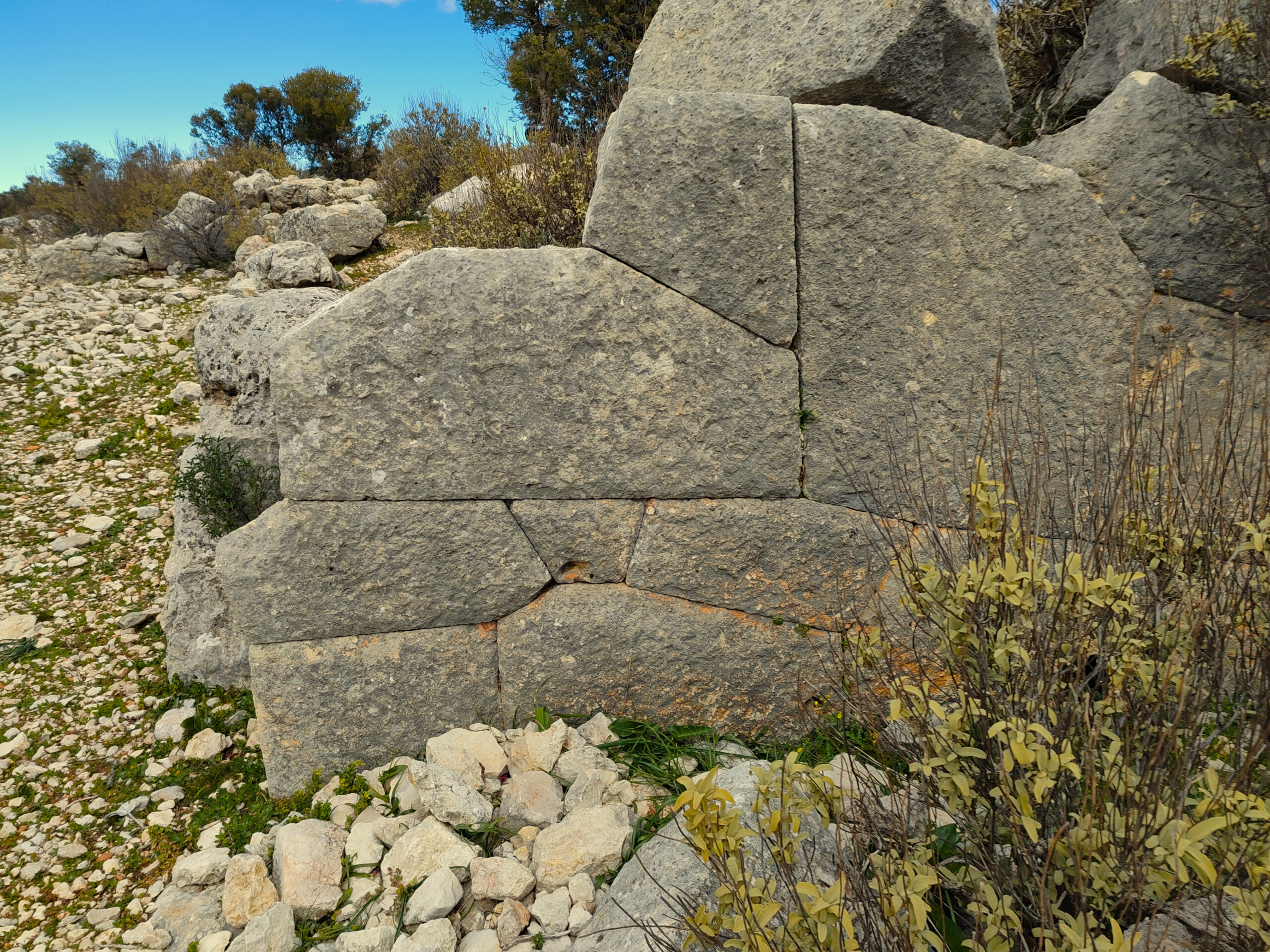
Cilicia is not only the Mediterranean coast and resort towns. In its mountainous territories north of Silifke lies a network of architectural layers where stone construction technology does not match the “expected” development of ancient societies. These structures are not ordinary Late Antique fortification ruins, but nodes of an older engineering logic, firmly embedded in the landscape yet absent from written chronicles.
The main concentrations of such masonry are found at Uzuncaburç (Diocaesarea) and within the territory of ancient Olba, at fortresses such as Meydankale along inland routes, and within sections of necropolises and defensive lines on the approaches to Korykos (Kızkalesi). Here, polygonal masonry appears not as a decorative feature of Hellenistic architecture, but as a functional and stable construction principle that predates the officially recognized layers.
Thus, the task is not to speculate, but to ask a precise question: why, in a landscape where history begins its narrative with Hellenism, do we encounter structures that are technologically coherent and structurally sound, yet chronologically incompatible with the accepted picture of the ancient world?
Beneath the Ashes of History
Uzuncaburç / Diocaesarea
The ruins of modern Uzuncaburç correspond to the ancient city of Diocaesarea, a major cult center that developed on the basis of the earlier settlement of Olba. The city was associated with the cult of Zeus Olbios and evolved from Hellenistic temples into Roman streets, a theater, necropolises, and residential quarters.
What matters here is that massive stone walls showing features of an older construction technique are preserved at the bases of fortifications and along the approaches to the surrounding hills. These structures combine polygonal blocks with later, more regular masonry. While the primary dating of the visible architecture belongs to the Hellenistic and Roman periods, the lower stone layer often lacks clear chronological markers, raising questions about its origin.
Adjacent to the Diocaesarea complex are roads and embankment structures that likely functioned as elements of a strategic network of fortifications from different periods. Parts of these installations display polygonal construction, especially in the lower defensive tiers of hilltop structures, where later architecture literally rests upon a more archaic mass. Direct dating of these layers is still absent from published studies, yet their technological autonomy is evident even through superficial observation.
Meydankale — an Inland Outpost
Meydankale is a fortified settlement positioned on a key route between the coast and the interior regions of Cilicia. Its walls, towers, and defensive structures are built from massive stone blocks, which in several sections demonstrate a transitional technique close to polygonal masonry, particularly in the lower courses.
Although the site is commonly dated to the Seleucid period and Late Antiquity, large stone wall panels may represent remnants of an earlier engineering tradition incorporated into a later defensive circuit. This practice is a characteristic feature of architectural palimpsests: a чужой foundation is absorbed into a new historical narrative, while memory of its origin fades.
Korykos / Kızkalesi and the Necropolises
The coastal center of ancient Korykos is best known for its harbor and Mediterranean structures dated to the Roman period. However, in the inland portions of its fortifications and in the adjacent necropolises, massive and roughly shaped stone blocks can be observed, whose construction techniques partially echo those seen at Olba and Meydankale.
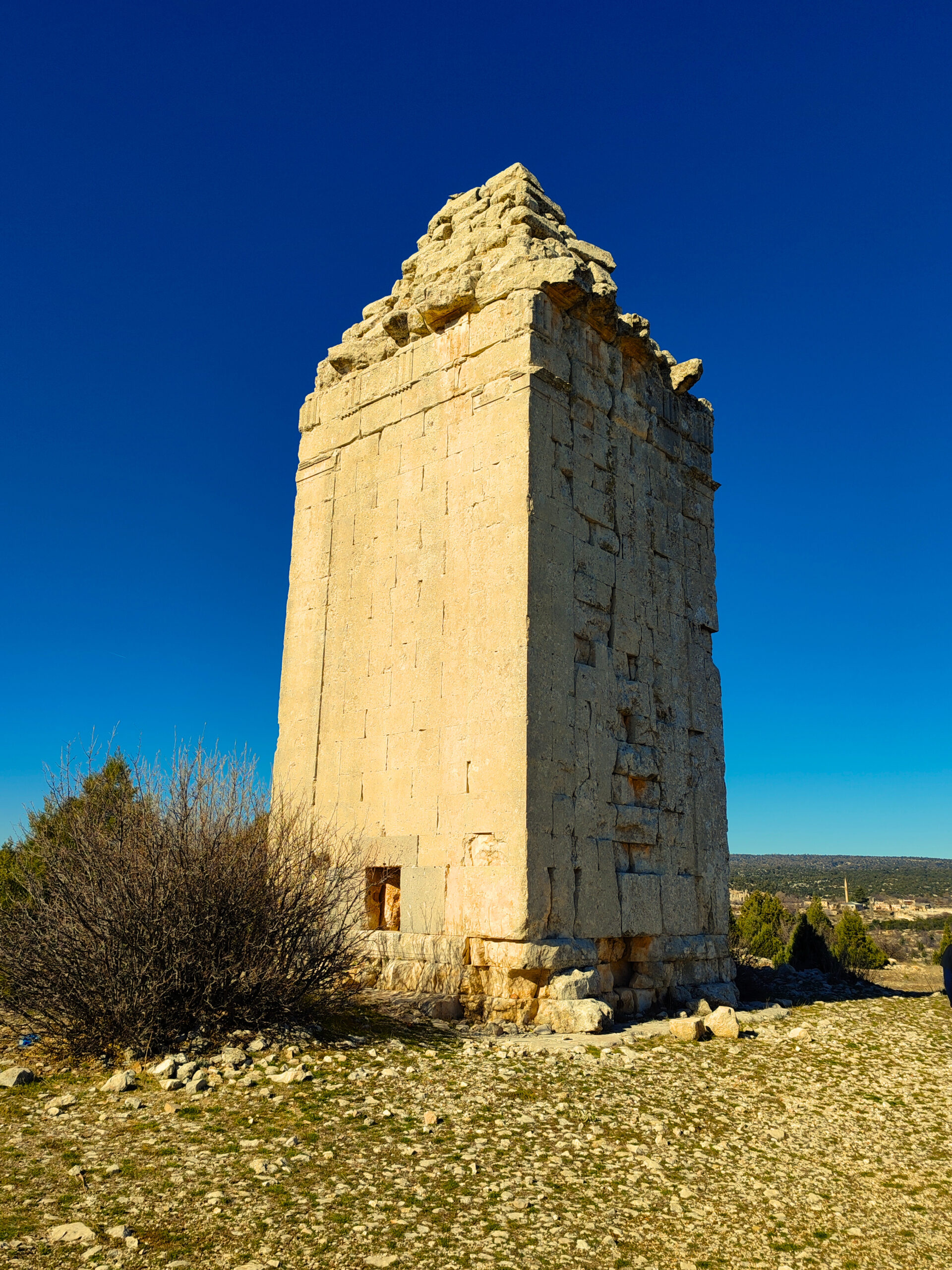
The necropolises of Korykos include numerous complex funerary monuments in which the architecture itself sometimes serves as evidence of an unusual masonry technique, particularly in the foundation walls of large burial chambers. Although these necropolises are traditionally attributed to Roman and Late Roman practices, the lower masonry at their bases shows signs of an older method that has yet to be fully studied.
Hillside Frontiers and Routes
The picture is further complemented by fortifications, towers, and routes along the valley slopes north of the main centers. Although many of these sites lack clear attribution and have been only superficially described, several sections demonstrably contain fragments of polygonal masonry in their foundation courses, laid well before the emergence of classical Hellenistic architecture in the region.
The Mechanics of Oblivion
A technology this durable did not disappear through catastrophe. It was absorbed by later construction phases. In several cases, Hellenistic temples and Roman walls literally sit on ancient foundations, as if later builders did not question their origin and simply accepted a ready-made platform.
Thus, layer after layer is erased — not through a single event, but through architectural parasitism, where later cultures reuse and reshape earlier ones without recording their names.
Traces of Older Worlds
Unlike mystical hypotheses, the explanations here remain architectural and engineering in nature:
• A pre-Hellenistic regional tradition, associated with cult centers where early communities possessed engineering knowledge but left no written sources (with the obvious contradiction of a complete absence of textual evidence).
• Technological borrowing, through contacts with Central Anatolian or eastern civilizations, whose influence may have filtered into local stonework. Yet this raises the question of why such adoption resulted only in isolated layers rather than sustained development.
• A system of large-scale pre-imperial engineering, not a political center or a state, but a network of stable construction practices spread along routes that long ago lost their literary memory.
Shadows at the Edge of Reason
Polygonal masonry in Cilicia does not serve as proof of super-civilizations. It undermines the assumption that we know when and how this region began to be settled. The walls do not ask who built them. They demonstrate the resilience of a technology that appeared before the world began to write about itself.
Echo of an Erased World
Contact with these landscapes does not evoke a sense of mystery, but a feeling of historical depth. Here, architecture is not merely an answer to a construction problem. It is a trace that history failed to explain — and failed to erase.
#VoiceOfRuins #ArchiveOfErasedEpochs #Cilicia #Silifke #Uzuncaburç #Diocaesarea #Olba #Meydankale #Korykos #Kızkalesi #PolygonalMasonry #AncientEngineering #LowerLayer #ArchitecturalPalimpsest #ErasedCivilizations


Our Telegram-channel: Voice Of Ruins https://t.me/Voice_Of_Ruins
Our Instagram: Voice Of Ruins https://www.instagram.com/voiceofruins/
Our group on Facebook: Voice Of Ruins https://www.facebook.com/share/g/16aitn9utM/
Our site: Voice Of Ruins https://www.voiceofruins.org



Leave a Reply