
Abandoned Pantheons
Ash Above the Altar
There are fires that are lit. And then there are other fires — the ones that simply are. Self-igniting fires.
They do not ask permission, do not wait for prayers, do not demand sacrifice. They emerge from stone as naturally as breath leaves the chest. Chimera is not flame. Chimera is the moment when the earth stops pretending to be dead.
Once, people climbed here barefoot. Not because it was required, but because shoes prevented them from feeling how the stone warmed beneath their skin. Altars stood here, but there were no temples. Prayers were spoken, but there were no priests. A faith without institutions, fire without dogma, sacredness without architecture.
Now only a slope scattered with rubble remains, and dozens of tongues of flame bursting from cracks, as if the planet itself is trying to say something — and cannot find the words.
The altar stands. The priests have vanished. The fire did not notice.
A Temple in Ruins
Chimera lived — and still lives — on Mount Yanartaş, on the Lycian coast, where cliffs slowly slide into the Mediterranean like weary titans. This place was never an ordinary sanctuary. No colonnades were built here. No marble pediments carved. Because the god was already present — it was burning.
From fractures in the limestone emerge natural gases: methane, ethane, traces of hydrogen. They ignite spontaneously, creating the effect of an eternal flame. For the ancient mind, this was not an explanation — it was proof.
Where stone burns, a god dwells.
Sailors climbed here to make offerings before dangerous voyages. Torches were lit for night navigation. They asked the fire to guard their ships, their families, their breath. Long before lenses, towers, and electricity, Chimera’s flame served as a navigational beacon. It guided ships through darkness like the whisper of the planet itself: come here — it is safe.
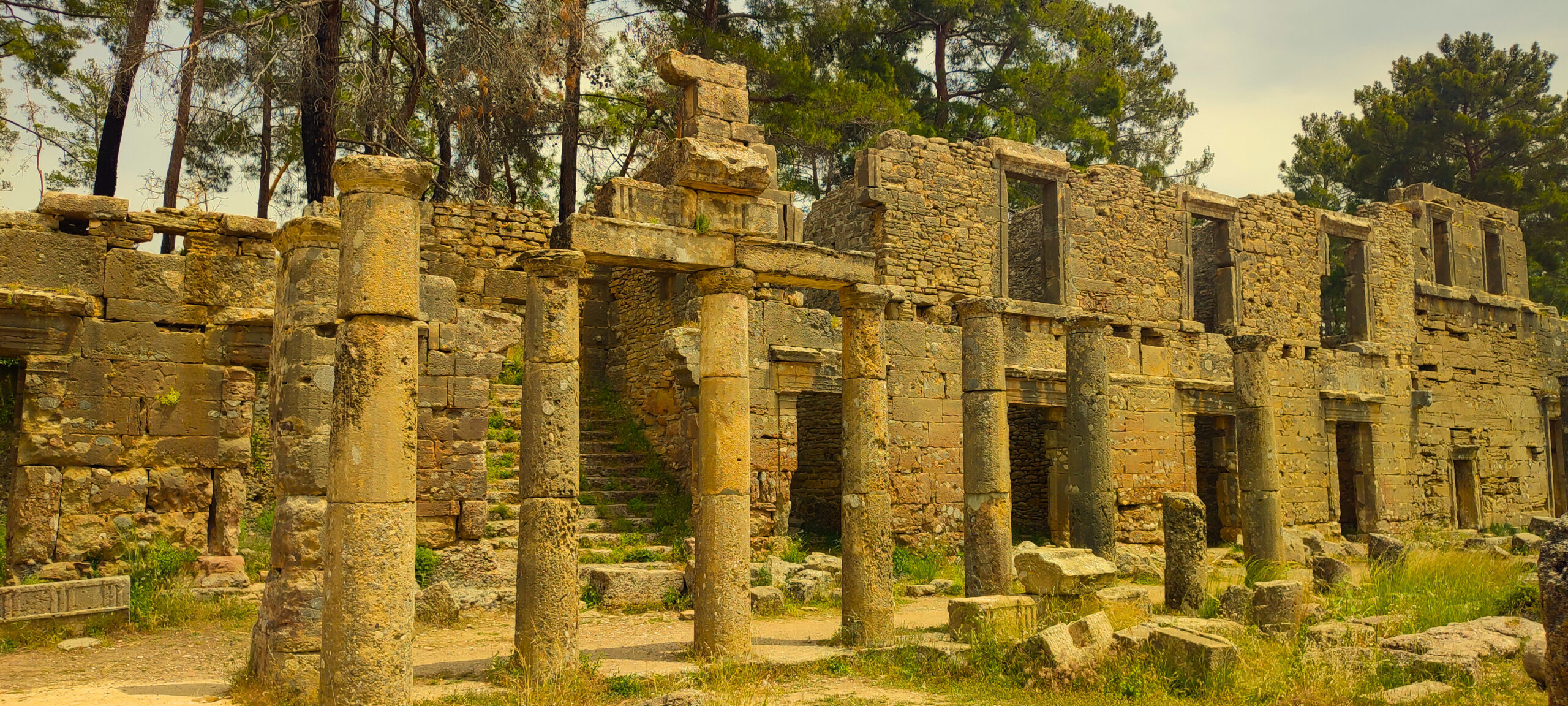
Archaeology confirms the cult: the foundations of a small temple, altars, coins bearing the image of Chimera, pottery, fragments of inscriptions. Yet the true temple is the mountain itself. Its cracks are columns. Its slope is the altar slab. Its fire is liturgy.
When the ancient world collapsed, the cult vanished. Not because someone forbade it, but because the people capable of believing in fire without intermediaries disappeared.
Faces of Oblivion
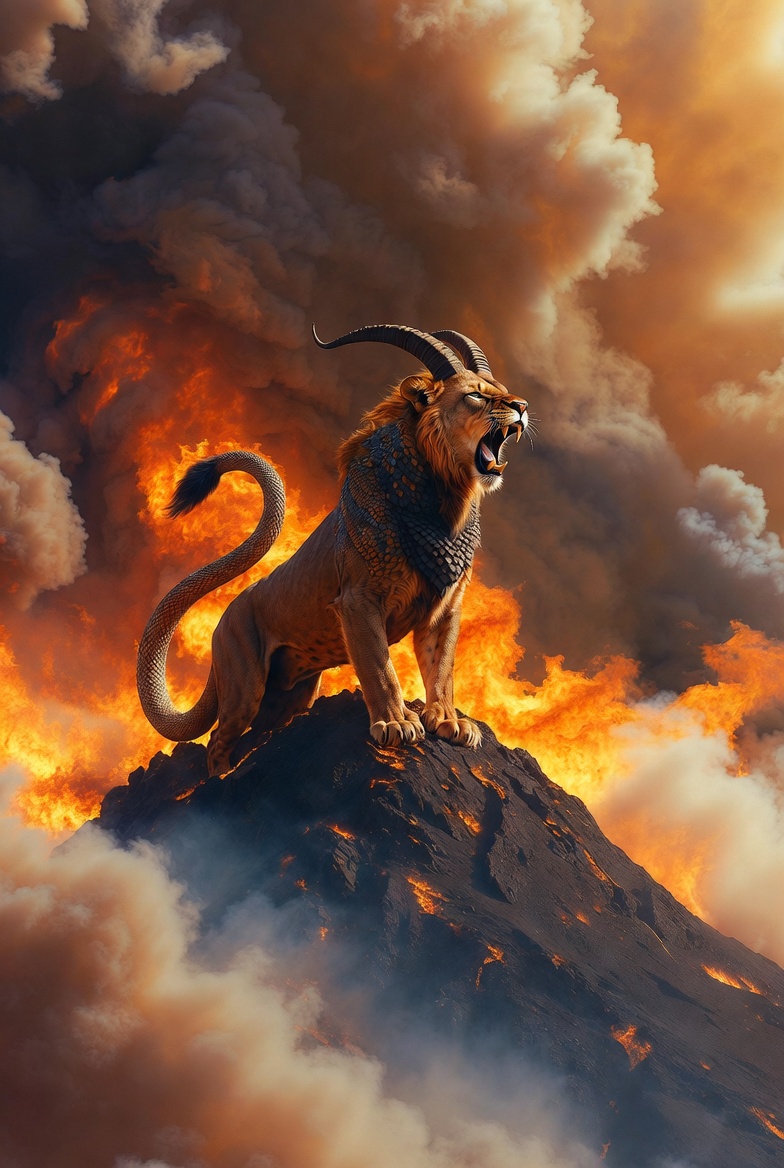
Chimera is an impossible being. Lion. Goat. Serpent. Three forms fused into a single breath.
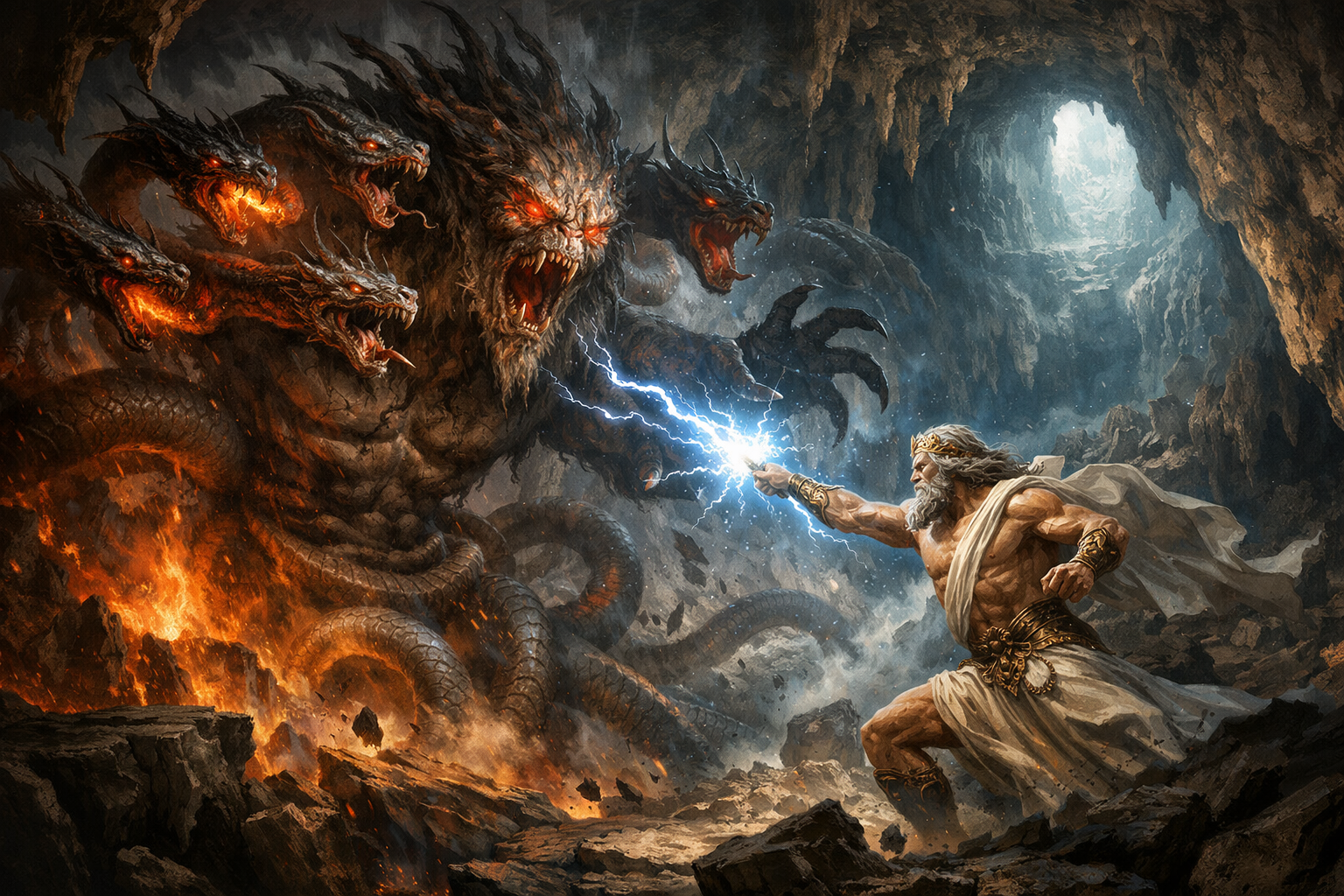
In classical mythology, she is a monster, born of Typhon and Echidna, slain by a hero. But in Lycia, Chimera was never merely a beast. She was the personification of the mountain itself.
The lion — sun and heat. The goat — rock, grazing, mountain life. The serpent — subterranean fire, hidden energy, death and rebirth.
This is not an animal. It is a geological totem.
Her cult had no rigid dogma. No sacred books. Only fire. Only stone. Only night and the sea, reflecting the flames like a second universe.
The name Chimera faded. But Yanartaş remained — “the burning stone.” Folk memory proved more durable than theology.
Shadows at the Edge of Reason
Why are we still drawn to dead gods?
Because modern deities are algorithms, graphs, indices, and interest rates. They do not burn. They flicker. You cannot feel them with your skin. You cannot hear them at night.
Chimera was honest. She promised no salvation. She simply burned.
Her flame did not explain the meaning of life, but revealed that the world is process, not result. That everything flows. That stone can be alive. That fear is not an enemy, but a form of attention.
The ancients did not worship Chimera. They coexisted with her. They did not beg for miracles or wait for signs. They knew: if the fire is here, the earth still remembers itself.
We fear such places. Because here, theory offers no shelter. Here you either feel — or you do not. Here you cannot pretend to believe. Here you either stand before the flame — or you leave.
How Did We Get Here?
Chimera lies not far from Çıralı, between Olympos and Kemer.
The ascent takes about thirty minutes. A stony trail. Dry air. The scent of pine and warm limestone. At the top — an open platform where dozens of fiery tongues burst straight from the ground.
The best time is after sunset. Then the flame becomes absolute. Darkness dissolves everything superfluous, leaving only fire and sky.
What matters:
do not step on cracks — fire erupts unexpectedly;
do not leave trash — this is not a campfire;
do not try to “test the heat” with your hands — burns here are honest and immediate;
do not turn the place into a picnic.
This is not a tourist attraction. This is a geological sanctuary.
Echo in the Void
Standing before the fire, I realized that time is an error of perspective. The flame may have been burning here for thousands of years. People come and go. Empires rise and fall. But the fire remains.
It knows no names. Distinguishes no languages. Remembers no faces.
And in this lies its absolute sanctity.
You understand: gods do not disappear because they are slain. They vanish because we stop seeing them. But the earth never forgets.
Chimera watches through the cracks. Even when no one watches back.
#VoiceOfRuins #AbandonedPantheons #Chimera #Yanartas #Lycia #Antalya #Fire #AncientCults #ForgottenGods #Archaeology #Mythology #RuinedTemples #DustOfTime #GeologyOfTheSacred #Olympos #Cirali #Mediterranean #History #ShadowsAtTheEdgeOfReason


Our Telegram-channel: Voice Of Ruins https://t.me/Voice_Of_Ruins
Our Instagram: Voice Of Ruins https://www.instagram.com/voiceofruins/
Our group on Facebook: Voice Of Ruins https://www.facebook.com/share/g/16aitn9utM/
Our site: Voice Of Ruins https://www.voiceofruins.org




Leave a Reply