
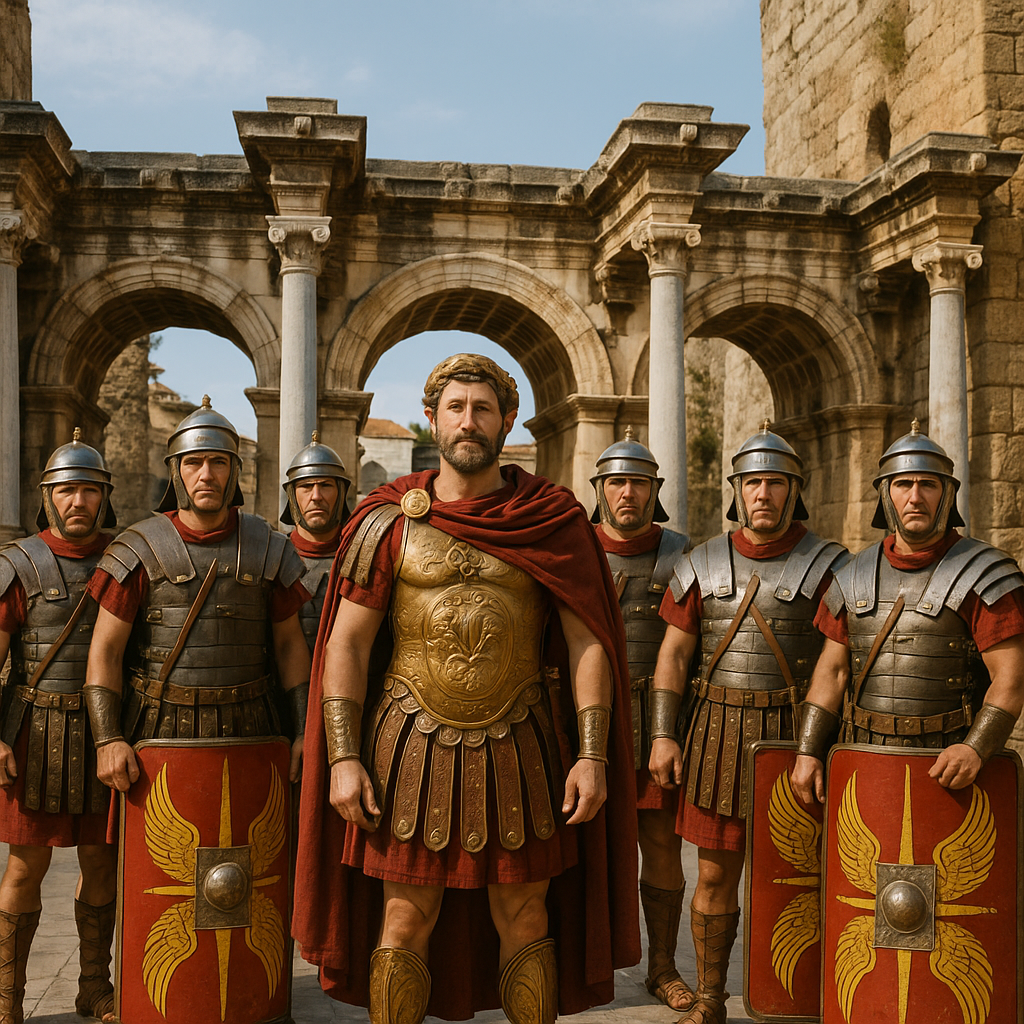
Dead Men with Ideas
Historical shadows don’t die—they dissolve into Wi-Fi signals and memes, returning with an absurd smirk. Hadrian, Roman emperor, built walls and temples, but his ideas are neural networks still glitching in our reality. This is a reconstruction laced with post-irony, where facts drown in the acid of imagination. We’re not resurrecting Hadrian; we’re making him tweet from the grave. Because ideas are immortal, but nobody, damn it, needs them.
Name in Stone
Publius Aelius Traianus Hadrian, emperor from 117 to 138, was the coder of the Roman Empire, favoring debugging over conquest. Born in 76 in Italica (modern Spain), he rose from a provincial kid to the empire’s CEO, thanks to Trajan’s adoption. Beard, Greek philosophy, and a passion for architecture made him Rome’s first hipster. He built walls, reformed laws, and roamed provinces like a blogger chasing aesthetics. But behind the aesthete’s facade lurked an administrator with a cold stare, ready to execute for any system glitch.
Hadrian was born on January 24, 76, in Italica, a Roman colony in Baetica. His father, Publius Aelius Afer, died when he was 10, leaving him under the care of Trajan, the future emperor, and Acilius Attianus. Young Hadrian absorbed Greek culture like a neural network trained on Homer’s poetry, earning the nickname Graeculus (“little Greek”). His career began with military tribunates on the Danube and participation in Trajan’s Dacian Wars (101–106). By 108, he was a consul-suffect, and in 117, after Trajan’s death, emperor. Rumors whispered that his adoption was orchestrated by Trajan’s wife, Plotina, but there’s no proof—just shadows of intrigue.
Hadrian’s reign broke sharply with Trajan’s policies. He abandoned Mesopotamia and Assyria, deeming them toxic assets. Instead of conquests, he fortified borders: Hadrian’s Wall in Britannia (122–128), 120 km of stone and discipline, became his pragmatism’s symbol. His diplomacy with Parthia secured peace in the East, but Judea went off-script. Banning circumcision and planning to build Aelia Capitolina with a temple to Jupiter on the Second Temple’s site sparked the Bar-Kokhba Revolt (132–135). Rome crushed it brutally: 580,000 dead, Judea renamed Syria Palaestina, Jewish identity under siege.
Hadrian was a reformer. He divided Italy into four regions, empowered equestrians in administration, and tasked Salvius Julianus with creating the Edict of Hadrian, codifying Roman law. His army grew disciplined, but he avoided unnecessary wars. He personally inspected legions, traveling the empire: Britannia, Gaul, Africa, Egypt, Asia Minor—his routes resembled a rock star’s tour. In Athens, he completed the Temple of Olympian Zeus; in Rome, he rebuilt the Pantheon (125–128), crafting an architectural masterpiece with a dome still envied by engineers.
His personal life was its own saga. His marriage to Vipsania Sabina was formal, childless, and cold. His true passion was Antinous, a young Greek who drowned in the Nile in 130. Hadrian went mad with grief: he founded Antinoopolis, deified Antinous, and erected statues across the empire. It wasn’t just love—it was a code he couldn’t debug. His Villa at Tivoli, a sprawling complex blending Greek, Egyptian, and Roman styles, became his personal escape from reality.
Late in life, Hadrian was ill, possibly with heart failure. He adopted Antoninus Pius, ensuring succession, and died on July 10, 138, in Baiae. His autobiography is lost, but his walls, temples, and laws speak for him.
Dust of Biography
Hadrian, the bearded emperor with a techno-shaman’s soul, stormed Pamphylia in 131 like a neural network trained on Greek myths and Roman concrete. In Perge, they raised a triumphal arch in his honor. In Antalya, he hacked reality, leaving the Hadrian’s Gate—an arch like a portal to his VR-empire, each stone a pixel of his code. There, he tuned the harbor like a Wi-Fi router, catching trade route signals. It wasn’t just construction—it was refactoring chaos, an attempt to patch the bug of eternity.
Now imagine: Hadrian didn’t die. He uploaded himself to the cloud, becoming the first digital emperor. In 2025, he’s in a coworking space in Tivoli, coding Antinous AI—a neural network generating Greek poetry and predicting revolts. His startup promises an eternal Rome, but there’s a bug: Antinous still drowns in a virtual Nile. Hadrian builds a VR-Pantheon where anyone can be a god for 0.01 ETH. His Judea is a blockchain colony where Bar-Kokhba mines crypto, but it crashes from a senatorial hack. Even in this world, Hadrian is the architect of chaos, unable to catch his soul’s bug.
Ideas That Haunt Us
Hadrian is a code of stability written in the language of chaos. His walls were attempts to hold the empire against entropy, but they fueled it. His philosophy: order through borders, integration through aesthetics. He wanted provinces to function as a unified network, but Judea proved even the best code breaks on human error. His Pantheon isn’t just a temple—it’s a metaphor: a dome holding everything, but it cracks without a foundation. Hadrian is about building systems to save ourselves, only to become their hostages.
Shadows at the Edge of Reason
Hadrian in 2025 is your firewall that fails against internal bugs. His Wall is our algorithms, filtering barbarians but not ourselves. His travels are our scrolling X for meaning. Antinous is the likes we give to drown out emptiness. Bar-Kokhba is our rebellion against systems we built. Hadrian reminds us: you can build an empire, but it’ll collapse if you don’t know who you are.
How Did We Get Here?
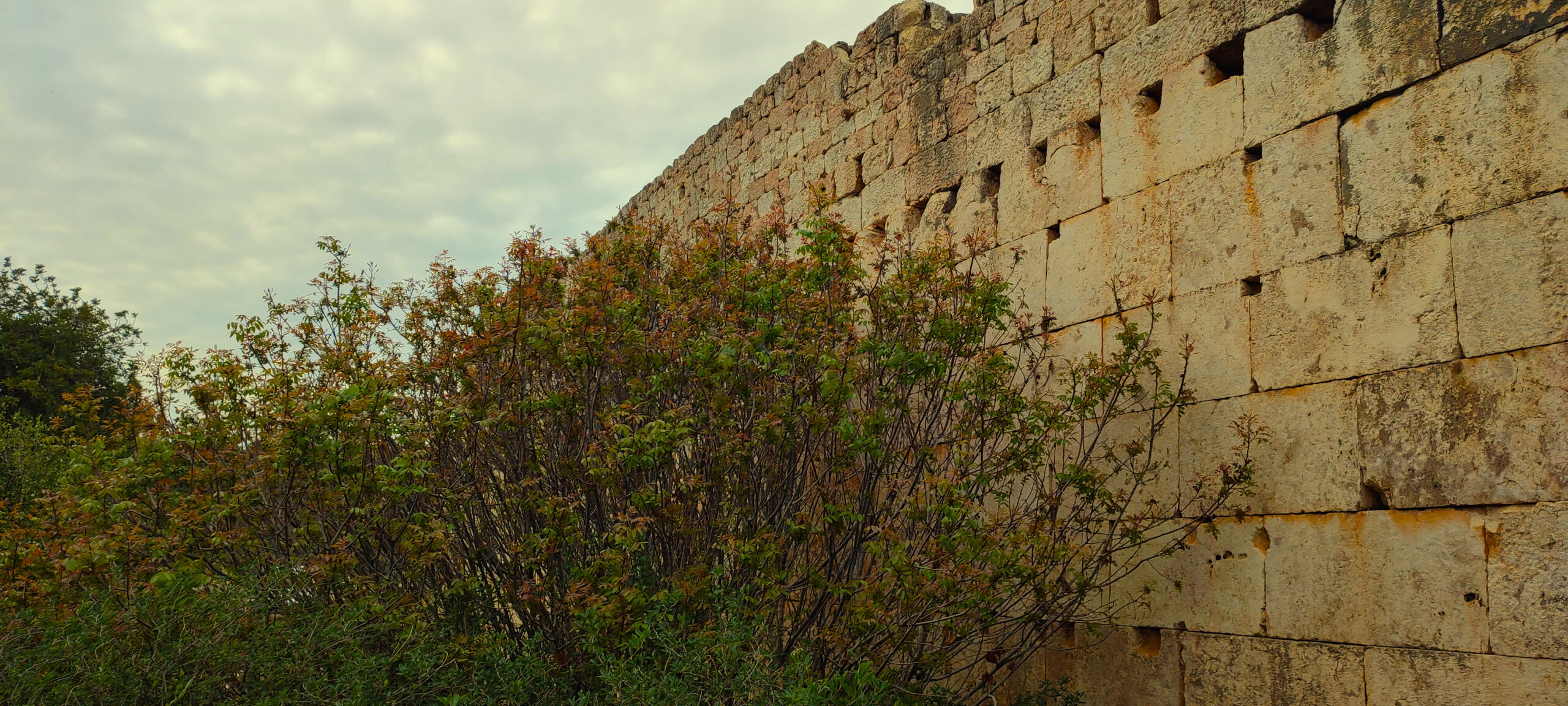
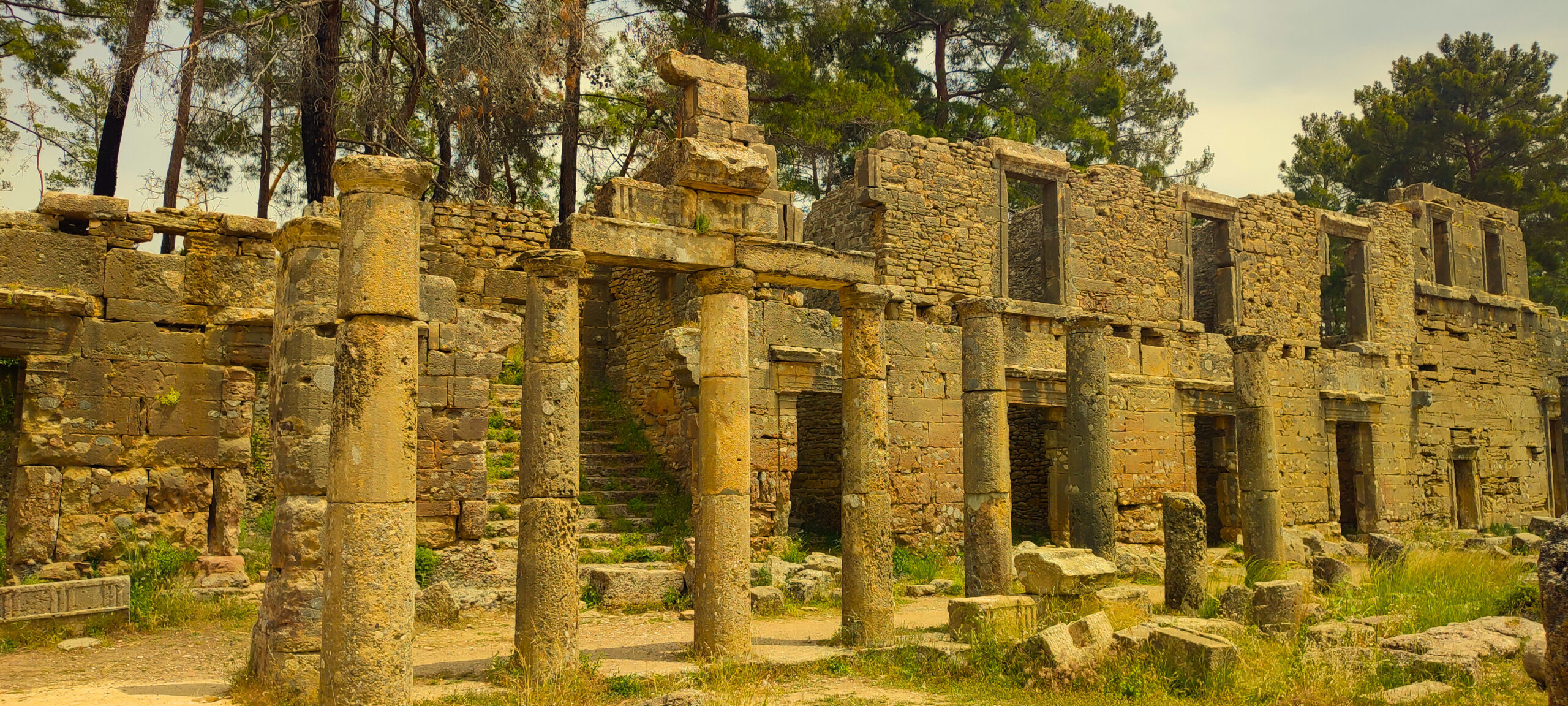
Hadrian lives in stone. The Pantheon in Rome is his main artifact, its dome still holding the sky. Hadrian’s Wall in Britannia is a tourist wall where you can touch his paranoia. The Villa at Tivoli is a museum of his soul, each pond a nod to Antinous. Hadrian’s Gate in Antalya is a portal, but where it leads and where it’s from depends on you. The ruins of Perge and other Roman cities are wallpapers capturing Hadrian’s shadows, along with thousands of others. His busts in the Vatican and British Museum stare at you, knowing you won’t finish this post. Search for him in X threads about borders or google Antinous statues—hundreds exist, each like an unread DM from the emperor.#VoiceofRuins, #DeadMenwithIdeas, #EmperorHadrian, #RomanEmpire, #Pantheon, #HadriansWall, #Antinous, #Bar-Kokhba, #Post-Irony, #PhilosophyOfChaos, #BordersAndControl


Our Telegram-channel: Voice Of Ruins https://t.me/Voice_Of_Ruins
Instagram: Voice Of Ruins https://www.instagram.com/voiceofruins/
Our group on Facebook: Voice Of Ruins https://www.facebook.com/share/g/16aitn9utM/
Our site: Voice Of Ruins https://www.voiceofruins.org




Leave a Reply