
Abandoned Pantheons
Ash Above the Altar
Once, a fire burned here that gave no warmth. It did not illuminate — it exposed. Stone, bone, fear.
The fire is gone now. Only ash remains, soaked into the earth like the memory of something that once watched.
Göbekli Tepe is not ruins. It is a pause, frozen between a breath and humanity’s first word. No one prays here anymore. Yet the place has not become empty. It has become attentive.
Each stone circle is like a dimmed pupil. Each pillar — the silhouette of someone who left without finishing a sentence.
The Temple in Fragments
Göbekli Tepe emerged before agriculture, before cities, before the idea of “living here forever.” People did not yet know how to grow bread, but they already knew how to build gods.
The stone circles were not made for living. No one slept here, ate here, or gave birth here. People gathered here to become smaller than the forces they summoned.
The temples were built, used — and then buried again. Not because they were destroyed. But because they were finished.
As if the cult had an expiration date. As if the gods were disposable.
Archaeology records stone. Myth records the emptiness between the stones.
Faces of Oblivion
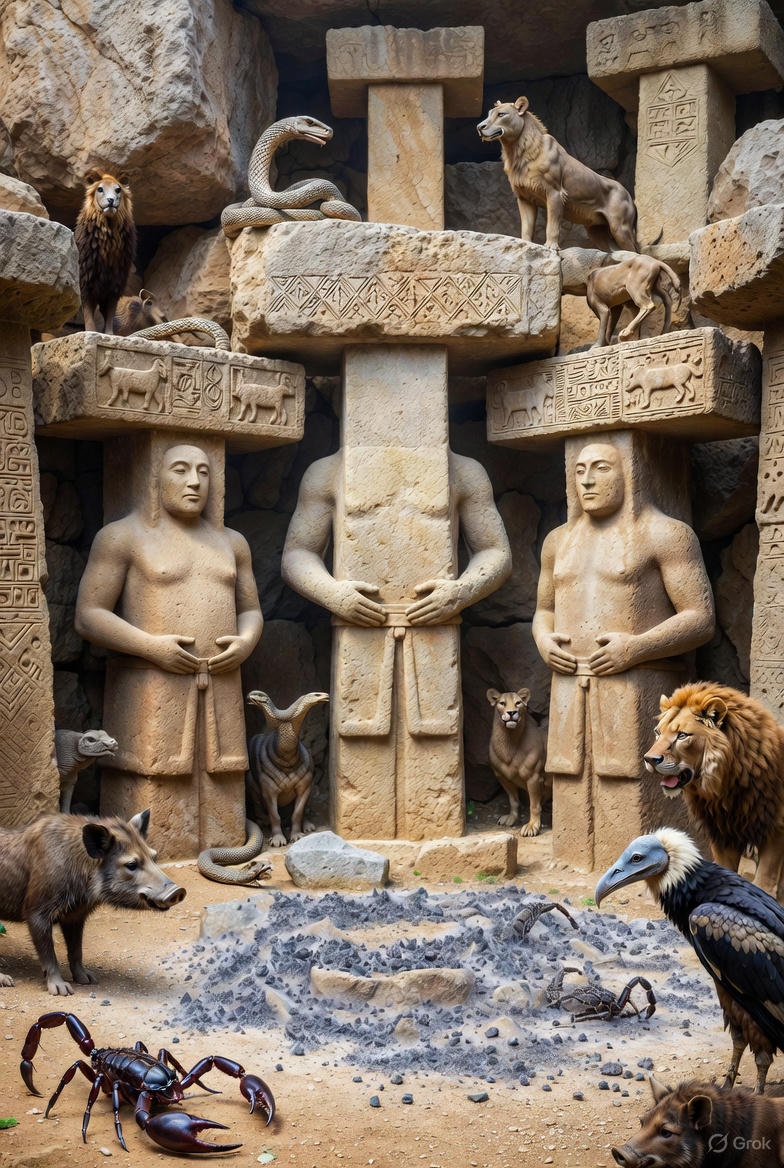
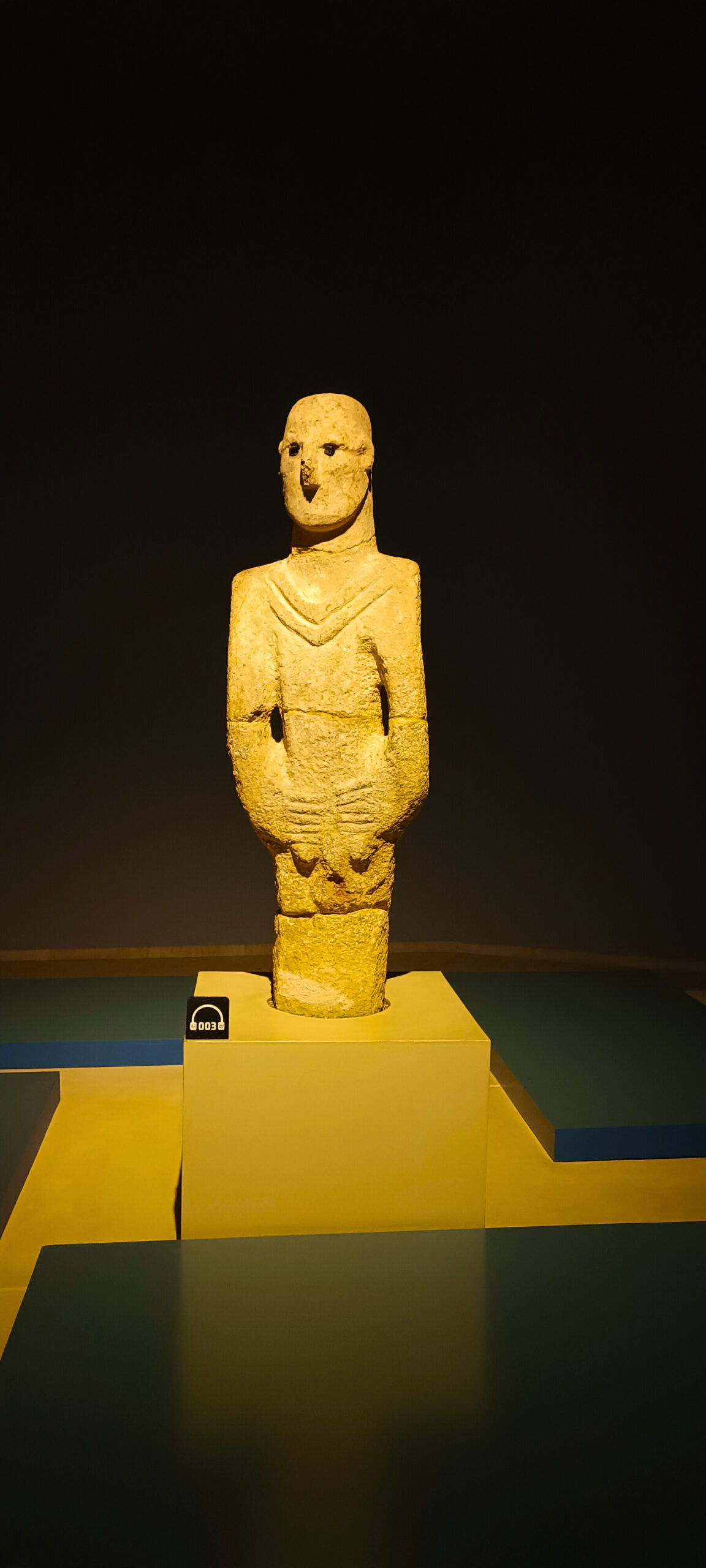
These gods have no faces. This is not a metaphor. It is architecture.
The T-shaped pillars are figures that possess:
hands folded over the belly,
belts,
sometimes an emphasized sex,
but no eyes, no mouth, no name.
They are not people, and not statues of people. They are forms of presence.
The faceless gods of Göbekli Tepe do not look — they know you are here. They have no need to see.
Around them are animals:
snakes,
lions,
boars,
scorpions,
vultures.
These are not decorations. They are an alphabet of fear, from which myths would later be assembled.
Here, a god is not a father and not a judge.
Here, a god is:
a threat,
a passage,
a reminder,
a boundary.
They were not given names because a name is a way to negotiate. And these were not negotiated with.
Shadows at the Edge of the Mind
Dead gods do not die. They relocate.
They leave temples and move into:
obsessive thoughts,
collective fears,
unconscious gestures.
The faceless gods of Göbekli Tepe are an early version of what would later become:
anonymous power,
the algorithm,
the market,
fate.
We no longer build stone circles for them. We build systems that also have no faces — and that also demand sacrifices.
These gods did not disappear. They simply learned to hide inside abstractions.
How Did We Get Here?
Göbekli Tepe lies in southeastern Anatolia, near Şanlıurfa.
What matters:
go early in the morning,
walk slowly,
look not at reconstructions, but at the joints between stone and emptiness.
What you should not do:
hunt for “beautiful shots,”
wait for revelations,
speak loudly.
This place does not answer. It remembers.
Echo in the Void
When you stand inside a stone circle, you suddenly realize something strange: there were never “believers” and “gods” here. There was something shared, something that arose between them.
The silence here is not empty. It is dense — like a gaze without eyes.
And at some point it becomes clear: the faceless gods never left. They simply no longer need stone.
Now they live inside us — in our fear of what has no name, but has power.
#VoiceOfRuins #AbandonedPantheons #GobekliTepe #FacelessGods #AncientCults #DeadGods #ArchaeologyOfFear #StoneCircle #TracesOfTheSacred #ShadowsAtTheEdgeOfTheMind


Our Telegram-channel: Voice Of Ruins https://t.me/Voice_Of_Ruins
Our Instagram: Voice Of Ruins https://www.instagram.com/voiceofruins/
Our group on Facebook: Voice Of Ruins https://www.facebook.com/share/g/16aitn9utM/
Our site: Voice Of Ruins https://www.voiceofruins.org




Leave a Reply