
Call of the Void
Vanishing Point
There are places where the world steps aside, making room for something else. Ihlara is exactly that kind of fracture in reality.
You enter the canyon, and it seems to recognize you.
Not your face, not your footsteps — but your inner vibration, that barely noticeable “noise” you’ve learned to hide. You feel a faint tingling in the air, as if the space itself is trying to recall where it has met you before.
The wind moves along the canyon floor with purpose, like a guide. And at some point you start to realize that the void here isn’t an absence — it’s a presence. A kind of entity that lived in these walls long before the stone itself.
Landscapes Without Hope
The canyon stretches before you not as a route, but as a test. The cliffs rise so high they form their own sky — dim, reluctantly letting light through, as if unwilling to be disturbed.
The greenery along the riverbanks is too dense, as though hiding whatever lives beneath it. The Melendiz River whispers the way people do when they know too much to speak plainly.
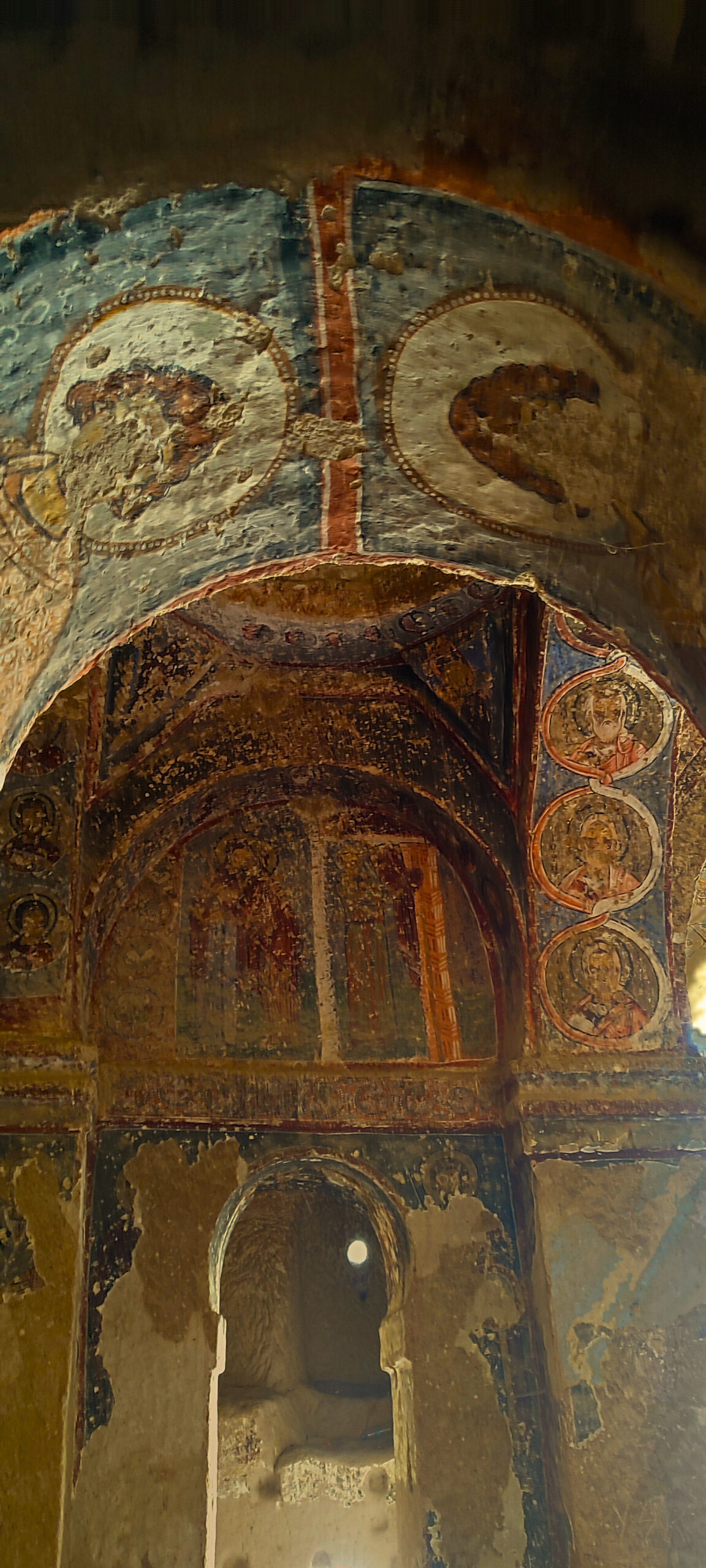
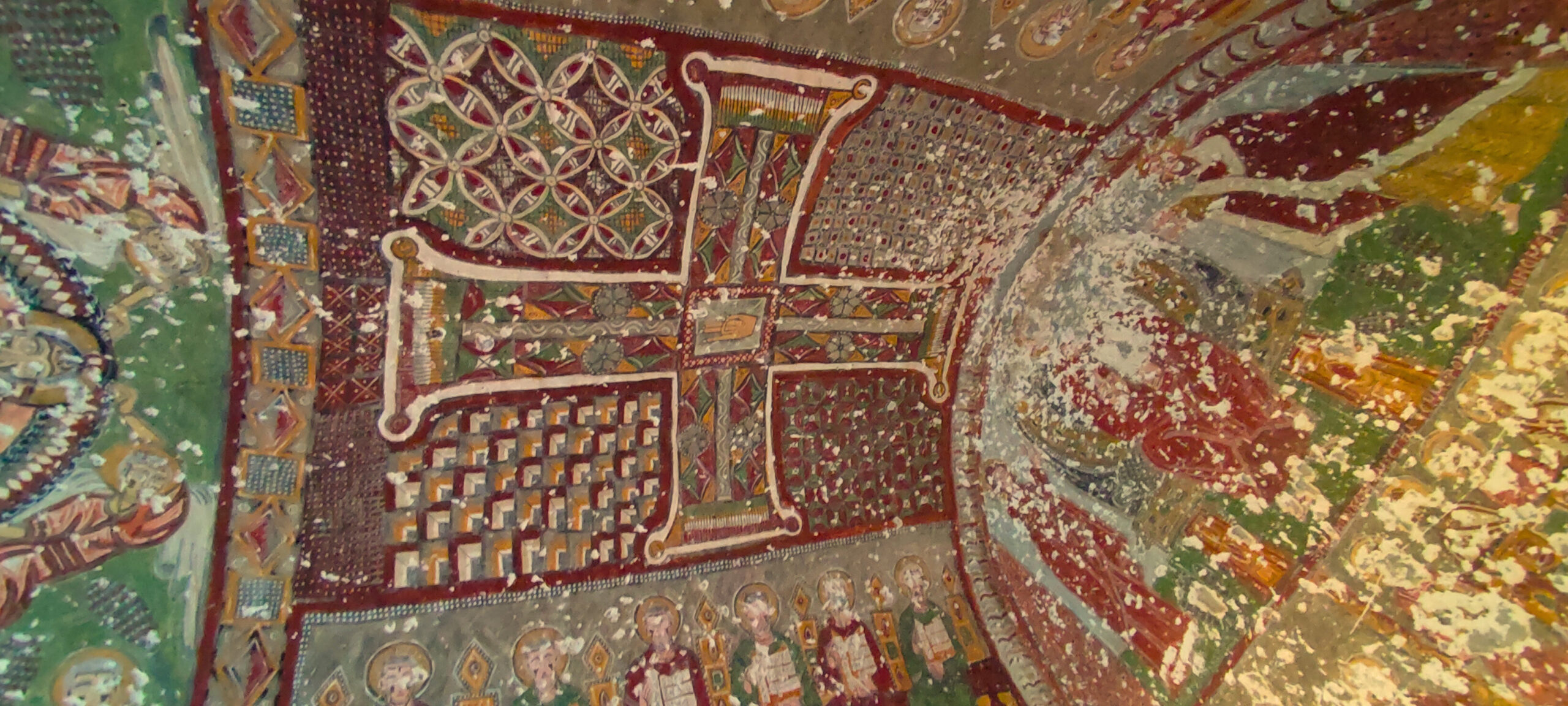
Cave churches appear one after another, but each feels like a portal that was closed too late. The frescoes have dissolved, yet faint lines of faces emerge only in your peripheral vision — as if they prefer you to look past them.
Sometimes the trails vanish altogether, as if the canyon is testing whether you are here by accident or by calling.
The Cry of Stones
There’s a sound you only hear here — low, subtle, like the breathing of an enormous creature beneath the earth. Some might call it vibration, wind, or echo. But you know: it’s the stones speaking to each other.
Sometimes it feels like they’re discussing you. Not maliciously — more like researchers examining a strange artifact.
Birds shoot overhead so fast it seems they’re avoiding some invisible tier of the canyon. The river makes sudden, almost nervous turns, like an animal reluctant to reveal its path.
And you feel watched — not by eyes, not by spirits, not by people. But by the very structure of space itself.
Shadows at the Edge of the Mind
With every hundred meters, the shadows grow longer and your thoughts grow quieter. And gradually the silence begins to take shape.
It feels like a faint memory — the sensation that you’ve been here before. That you’re not moving forward, but returning.
Ihlara seems to whisper: “You’re not searching for the path. You’re remembering it.”
And when the sun slips behind the cliffs, the shadows become almost material — as if something living could be molded out of them.
You suddenly realize that mysticism exists only in places where people are afraid of it. Here, it spreads like mist — softly, effortlessly.
Traces on the Map
— Start from Selime: the canyon will open itself gradually, as if getting to know you.
— The route is about 14 km, but the reality inside feels much longer.
— In Belisırma, the silence sounds louder than the water.
— The churches appear often, yet each feels like its own ritual.
— The river is the most reliable guide: it is older than anything else here.
— There’s always shade beneath your feet, though at times it feels a bit too alive.
Physical difficulty: moderate. Psychological depth: far greater than most mountain trails.
Echo in the Void
When you leave Ihlara, it feels like someone walks behind you for a few more minutes. Then the steps disappear. But not the feeling.
As if the canyon touched your memory and placed a small marker there: “Will return.”
And you know you will return. Because places like this don’t end. They only close — until you hear the call again.
#GolosRuin #DustOfAges #Ihlara #Cappadocia #mysticism #canyons #cavechurches #silence #callofthevoid #trails #memory #emptiness


Our Telegram-channel: Voice Of Ruins https://t.me/Voice_Of_Ruins
Our Instagram: Voice Of Ruins https://www.instagram.com/voiceofruins/
Our group on Facebook: Voice Of Ruins https://www.facebook.com/share/g/16aitn9utM/
Our site: Voice Of Ruins https://www.voiceofruins.org



Leave a Reply