
Dust of Time
Entrance to the Labyrinth
If you walk long enough along the cliffs of Kızılkoyun, you begin to feel as if you’ve entered not a necropolis, but a data center. Only instead of server racks — niches. Instead of cables — cracks. Instead of the hum of cooling fans — a silence that buzzes inside your skull.
This is not a place of mourning. It is a place of storage.
An archive. A cloud. A backup copy of humanity carved into stone.
You don’t feel tragedy here. You feel accounting. As if someone in antiquity once sat down, unrolled their scrolls, and said: — Right. Everyone into their cells. No fuss.
Kızılkoyun is not about death. It is about order.
Past the Empires
Archaeologists speak of a Hellenistic origin, later reworked by the Romans and adapted by Byzantium. Scholars love linear narratives — they make chaos tolerable.
But the structure of the necropolis stubbornly resists simple explanation.
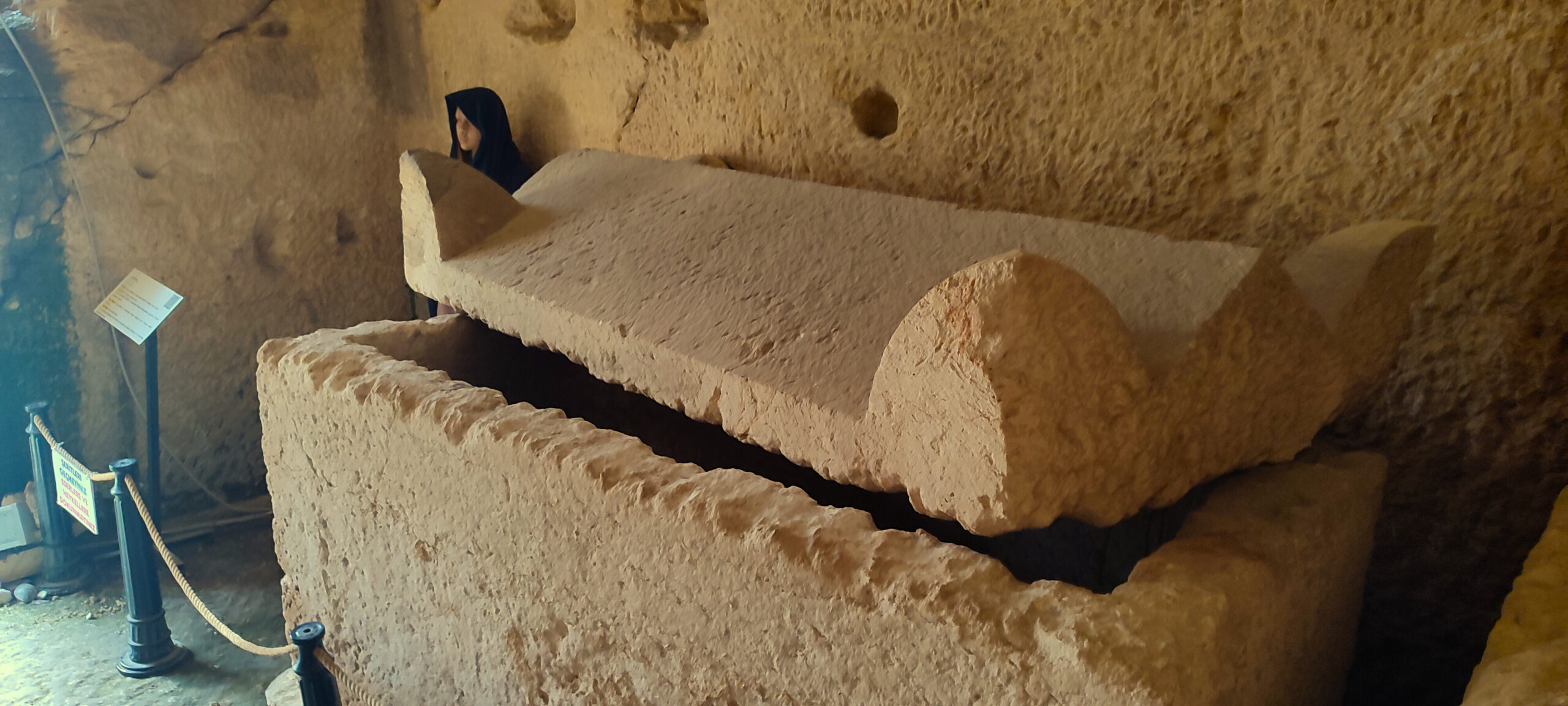
The tombs are carved into the rock in multiple tiers, forming a complex spatial network. Some chambers are connected by corridors. Others are deliberately isolated. There are traces of reuse. There are areas where bodies were removed and the niches left empty, as if erasing memory itself.
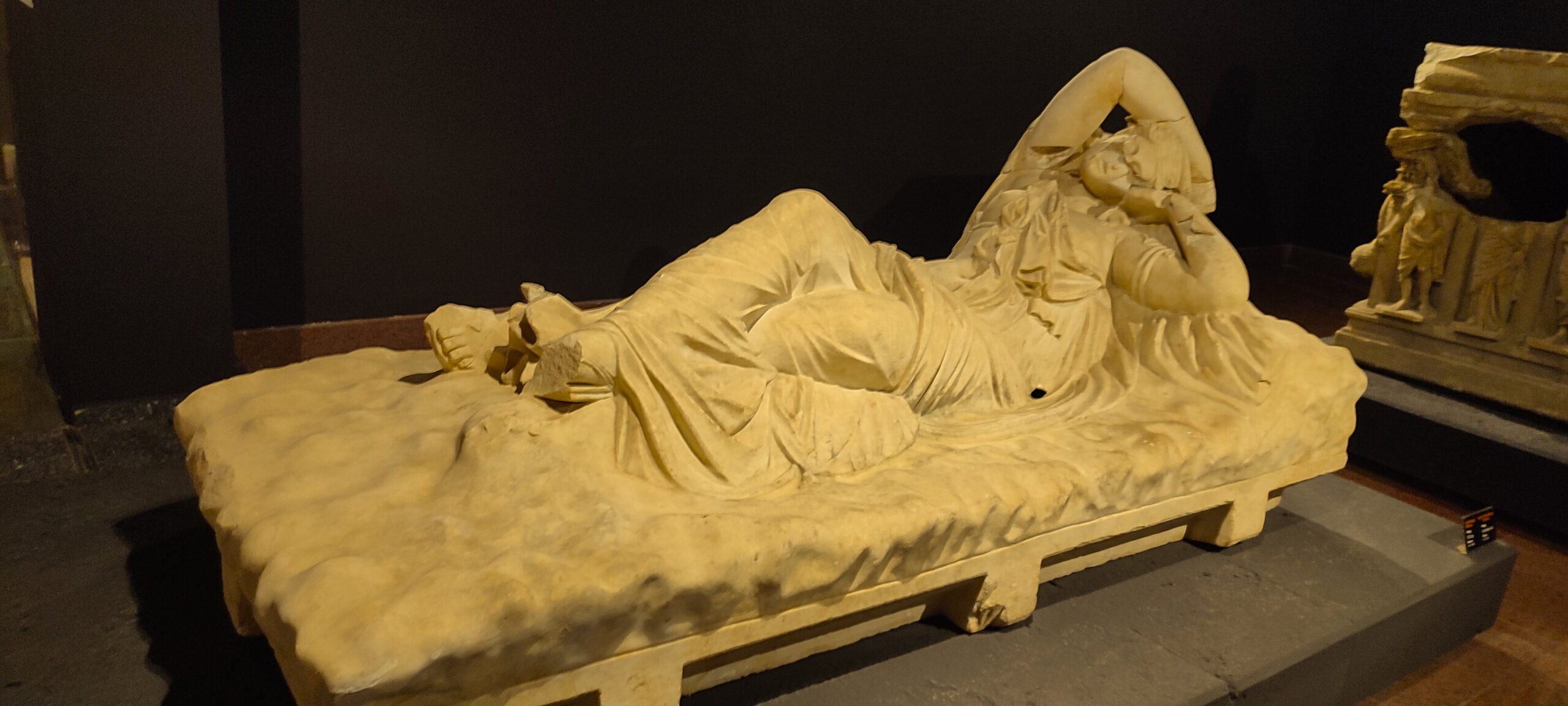
Sarcophagi have been found, fragments of funerary goods, coins, lamps, remnants of textiles, traces of ochre and soot. Everything points to elaborate burial rituals in which light and darkness played equal roles.
Scholars suggest that this necropolis served not only the elite, but also the urban middle class. A mass market of the afterlife. The democratization of eternity.
Death stepped out of palaces and became an affordable service.
Fragments of the Present
Today, Kızılkoyun is a state of cultural schizophrenia. Archaeological excavations collide with residential buildings. Modern kitchens press against ancient façades. Television antennas sprout directly from burial niches.
Sometimes new chambers are discovered while laying water pipes. Sometimes — human bones appear in garage foundations. Sometimes — entire burials surface beneath bedrooms.
And every time the same strange question arises: who is living above whom?
Kızılkoyun is gradually being cleared, protected zones are established, sections are museified. But it resists becoming an attraction. It is too alive. Too integrated into the city. Too inconvenient.
This is a necropolis that refuses to become the past.
Shadows at the Edge of the Mind
There is a theory that ancient cities placed necropolises not outside their walls, but within the landscape, so the dead could continue participating in life. Kızılkoyun is proof.
You feel a constant presence here. Not spirits. Not ghosts. Witnesses.
Each niche is like an eye. Each crack — a wrinkle on the face of the planet. The rock watches. The rock remembers.
The humor lies in the fact that we, modern people, fear cemeteries yet calmly live inside them. We place coffee machines above bones, Wi-Fi routers above skulls, and call it progress.
Kızılkoyun laughs.Silently. In limestone.
How Did We Get There?
Scholars debate whether this necropolis was part of a religious complex or merely a pragmatic urban project. Analysis of chamber layouts, orientations, traces of soot, and ritual lamps indicates a carefully designed symbolism of the soul’s journey.
Some niches face sunrise. Others — sunset. Others — absolute darkness.
It seems the dead were offered options.
Logistics are simple: the center of Şanlıurfa, easy access on foot, by bus or taxi, minimal formalities. But prepare yourself mentally: you’re not just walking. You’re passing between versions of the end.
Echo in the Void
The strangest sensation came later — not inside the necropolis, but already back in the city.
As if the entire city of Şanlıurfa were merely a decorative shell above a colossal archive storing all previous versions of humanity.
We think we build cities. In reality, we build on top of the dead.
Kızılkoyun is not about fear. It is about precision.
It tells you:
you are a temporary file.
your storage time is limited.
no backup copy is provided.
And perhaps that is why this place feels so terrifyingly honest.
#VoiceOfRuins #DustOfTime #Kızılkoyun #Necropolis #Şanlıurfa #Archaeology #Ruins #AncientCities #InfrastructureOfDeath #Mysticism #Decay #Eternity


Our Telegram-channel: Voice Of Ruins https://t.me/Voice_Of_Ruins
Our Instagram: Voice Of Ruins https://www.instagram.com/voiceofruins/
Our group on Facebook: Voice Of Ruins https://www.facebook.com/share/g/16aitn9utM/
Our site: Voice Of Ruins https://www.voiceofruins.org



Leave a Reply