
Archive of Erased Epochs
A Fracture in the Chronology
In the Silifke region there is architecture that behaves incorrectly. Not provocatively, not sensationally — incorrectly in the precise way an error appears in an equation. It does not directly destroy the accepted version of the past, but it constantly forces it to justify itself.
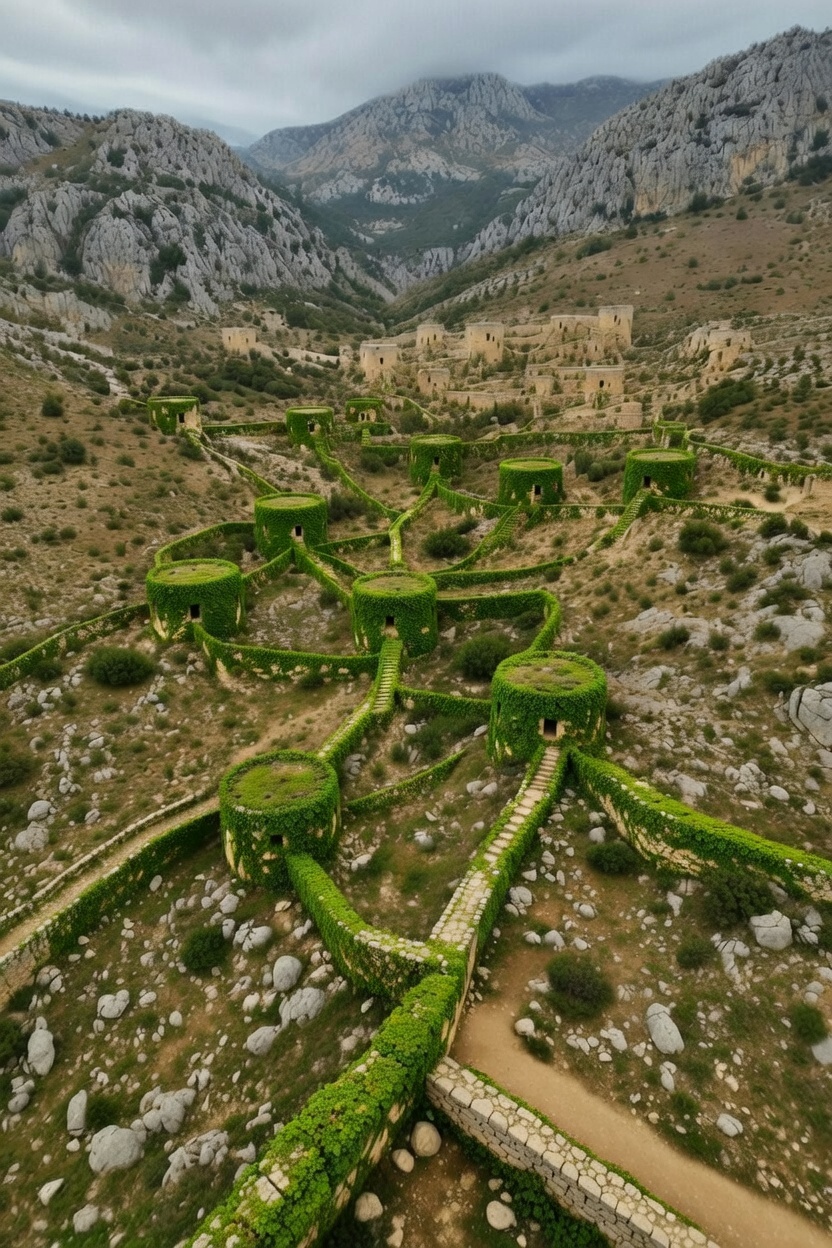
We are talking about polygonal masonry in the mountains of Cilicia — primarily in the area of Olba / Diocaesarea (modern Uzuncaburç), as well as along the periphery of the Göksu valley and in a chain of small mountain settlements north of Silifke. This is not an isolated object and not a “strange stone.” It is an entire lower construction layer, systematically embedded into the landscape.
The official chronology states that the region becomes active during the Hellenistic period and is later rebuilt by Roman and Late Antique structures. Formally, everything fits. But if one looks not at columns and inscriptions, but at foundations, a chronological gap emerges. The lower architectural layer appears technologically complete earlier than the social and political conditions that would normally require such technology.
This is where history cracks — not loudly, but structurally.
Beneath the Ashes of History
Facts that cannot be ignored.
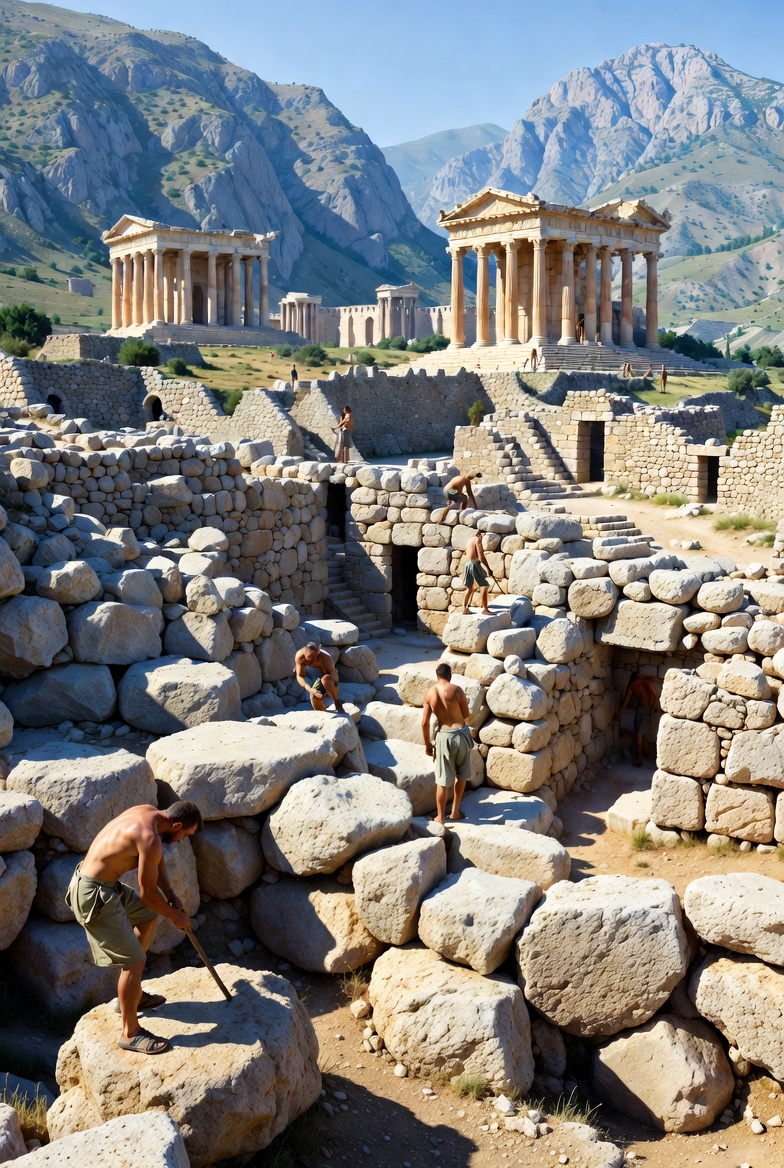
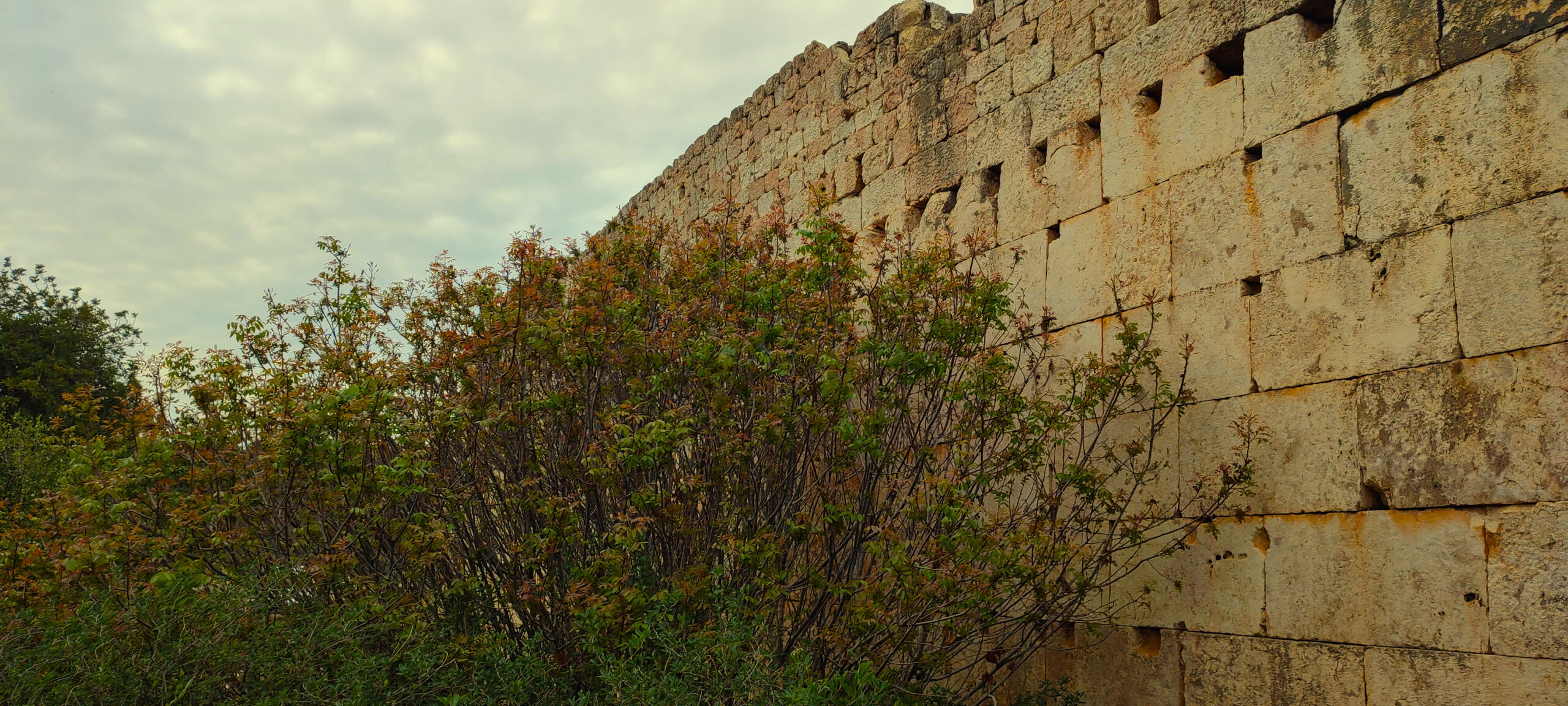
Olba / Diocaesarea is located in a hard-to-access mountainous zone. It is not a coastal metropolis, not a primary trade hub, and not an early administrative capital of the region. And yet, at the base of temple platforms, terraces, retaining walls, and sections of fortifications, polygonal masonry without mortar is used, with a high degree of stone precision.
The stones have complex multi-angled shapes, meeting along several planes, and in some cases demonstrate techniques known from Mycenaean and Central Anatolian monuments, but atypical for standard Hellenistic construction in Cilicia. This is not decorative craftsmanship. These are engineering technologies that do not fit the general picture.
Crucially, polygonal masonry here is not used in representative buildings, but in infrastructure — retaining walls, slope terracing, foundational levels. That is, where stability matters more than visibility.
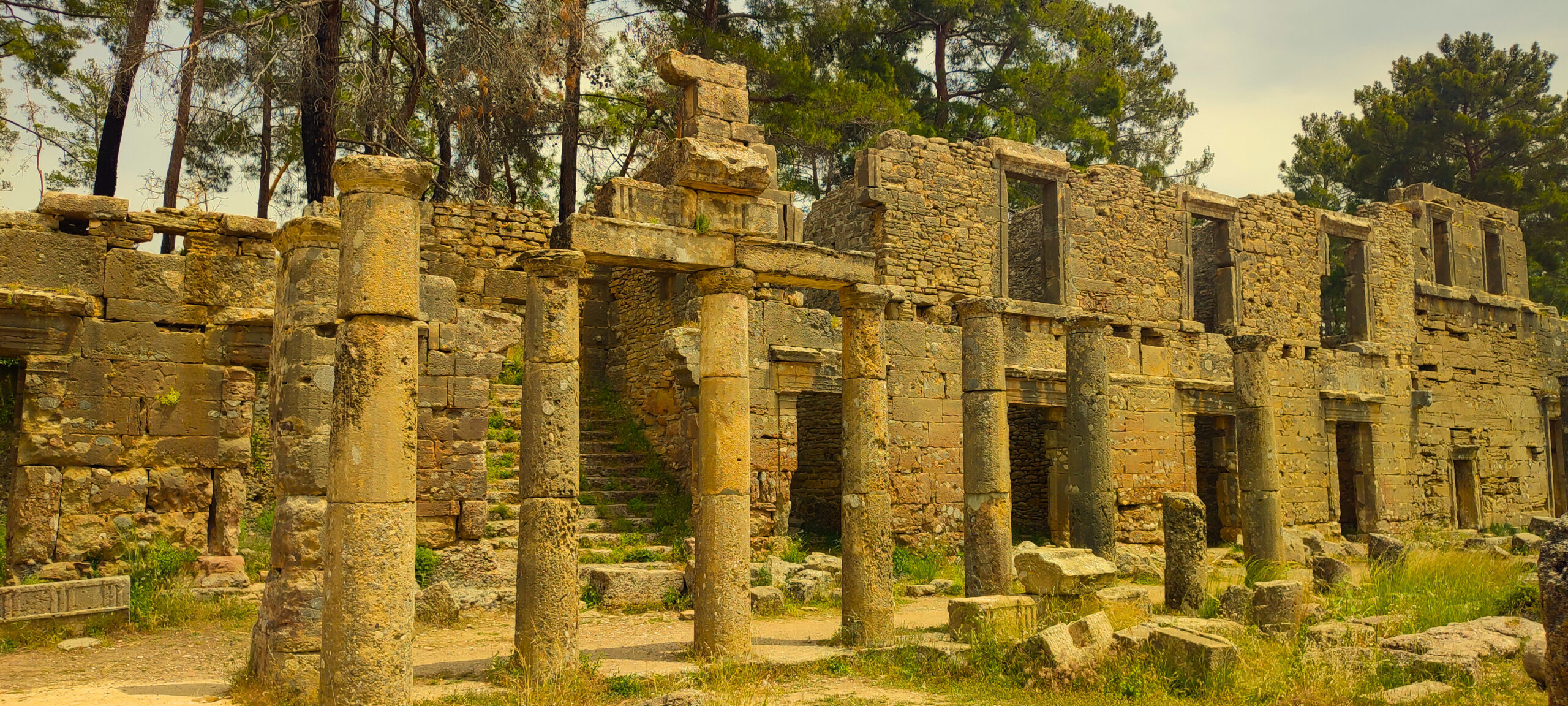
The same pattern is recorded around Silifke. In the Göksu valley and on the adjacent slopes, sections of massive walls and terraces appear, partially buried, partially integrated into later constructions. In many cases, later walls quite literally “sit” on an older foundation of a different technological nature.
This is a classic archaeological marker: older layer → secondary use → loss of authorship.
The Mechanics of Oblivion
The disappearance of such layers is rarely linked to catastrophes. More often, it is the result of architectural parasitism. If a foundation is good, it is not dismantled. It is reused. And once reused, it ceases to be visible.
Polygonal masonry in Cilicia was not destroyed. It was absorbed. Hellenistic and Roman builders did not ask “who built this”; they cared about “how reliable is it.” Memory is erased not by fire, but by practicality.
Over time, upper layers acquire dates, inscriptions, styles. The lower layer remains mute. It begins to be dated automatically “by context,” not by technology. Thus an illusion of a continuous history emerges, while in reality it is layered and asynchronous.
Traces of Older Worlds
It is important to avoid extremes. Polygonal masonry does not prove the existence of mythical super-civilizations. But it does point to an engineering tradition that does not fully align with the social landscape known to us for the region.
Several working hypotheses exist, and none of them fully closes the case.
The first is a local pre-Hellenistic tradition connected to mountain cult centers and autonomous communities that existed before political integration of the region. The problem is that the scale and complexity of the works do not correspond well to the presumed organizational capacity of such communities.
The second is technological transfer through migrations or lost contacts with other centers of the Eastern Mediterranean. But this raises another question: why is the technology used fragmentarily and then disappears without development?
The third is the existence of an earlier construction phase not formalized as a “civilization” in the conventional sense, but possessing stable engineering knowledge. Not an empire. Not a state. A system.
This version is the most uncomfortable, because it does not fit the familiar linear model of progress.
Shadows at the Edge of Reason
Polygonal masonry disturbs not because it is “mysterious,” but because it is excessive. History dislikes excess without explanation. When something is built too well for its time and place, it undermines confidence in the uniqueness of the current phase of humanity.
We are used to thinking that complex technologies emerge only under certain conditions: population density, statehood, economy. But the stone in the mountains of Cilicia does not confirm this formula. It silently suggests that there were other scenarios.
Not the first. Not the only ones. Just those whose walls still stand.
Echo of an Erased World
Contact with these structures does not produce a feeling of discovery. It produces a feeling of intrusion. As if you are looking at the infrastructure of a world that did not consider it necessary to leave us an explanation.
Polygonal masonry in Cilicia is not a puzzle to be solved. It is a reminder that history is not a complete archive, but a selection. And much in that selection was dictated by convenience rather than truth.
The stones do not demand belief. They demand recognition: we are not living at the beginning of history — and perhaps not even in its middle.
#VoiceOfRuins #ArchiveOfErasedEpochs #Cilicia #Silifke #Olba #Diocaesarea #Uzuncaburc #PolygonalMasonry #AncientEngineering #LowerLayer #ErasedCivilizations #ArchitectureWithoutAuthors #ChronologicalFracture #StonesOlderThanCities


Our Telegram-channel: Voice Of Ruins https://t.me/Voice_Of_Ruins
Our Instagram: Voice Of Ruins https://www.instagram.com/voiceofruins/
Our group on Facebook: Voice Of Ruins https://www.facebook.com/share/g/16aitn9utM/
Our site: Voice Of Ruins https://www.voiceofruins.org




Leave a Reply