

Archive of Erased Epochs
Crack in Chronology
You descend the narrow staircase into Derinkuyu, Cappadocia. The air grows thick, like a memory no one is supposed to remember. On the eighth level — a church. The cross is carved into the tuff so cleanly it seems as though it was cut yesterday. The official version says: 7th–8th century, Byzantine Christians hiding from the Arabs.
But the tuff is volcanic ash millions of years old. And the chisel marks on the walls below the “Christian” levels look as if they belong to hands that understood geology far better than we understand our smartphones. Here chronology first glitches. You stand in a place where time has cracked, and through the fissure something older than us is staring back.
Under the Ashes of History
The volcanoes Erciyes and Hasan Dağ once spewed out this entire world we call Cappadocia. Layers of ash and lava compressed into soft, obedient tuff — the perfect material for carving. Wind and water, over millions of years, sculpted the “fairy chimneys”: tall, phallic, almost living pillars with stone hats. The valleys of Göreme, Ihlara, and the Rose Valley — all of it one vast natural temple.
Underground lie entire cities of Cappadocia. Derinkuyu descends 85 meters deep, with 18 levels, ventilation shafts, wells, wineries, schools, and churches. Kaymaklı is connected to it by a nine-kilometer tunnel. Özkonak, Tatlarin, Güzelyurt — dozens of such complexes. Officially: expanded by Christians to survive.
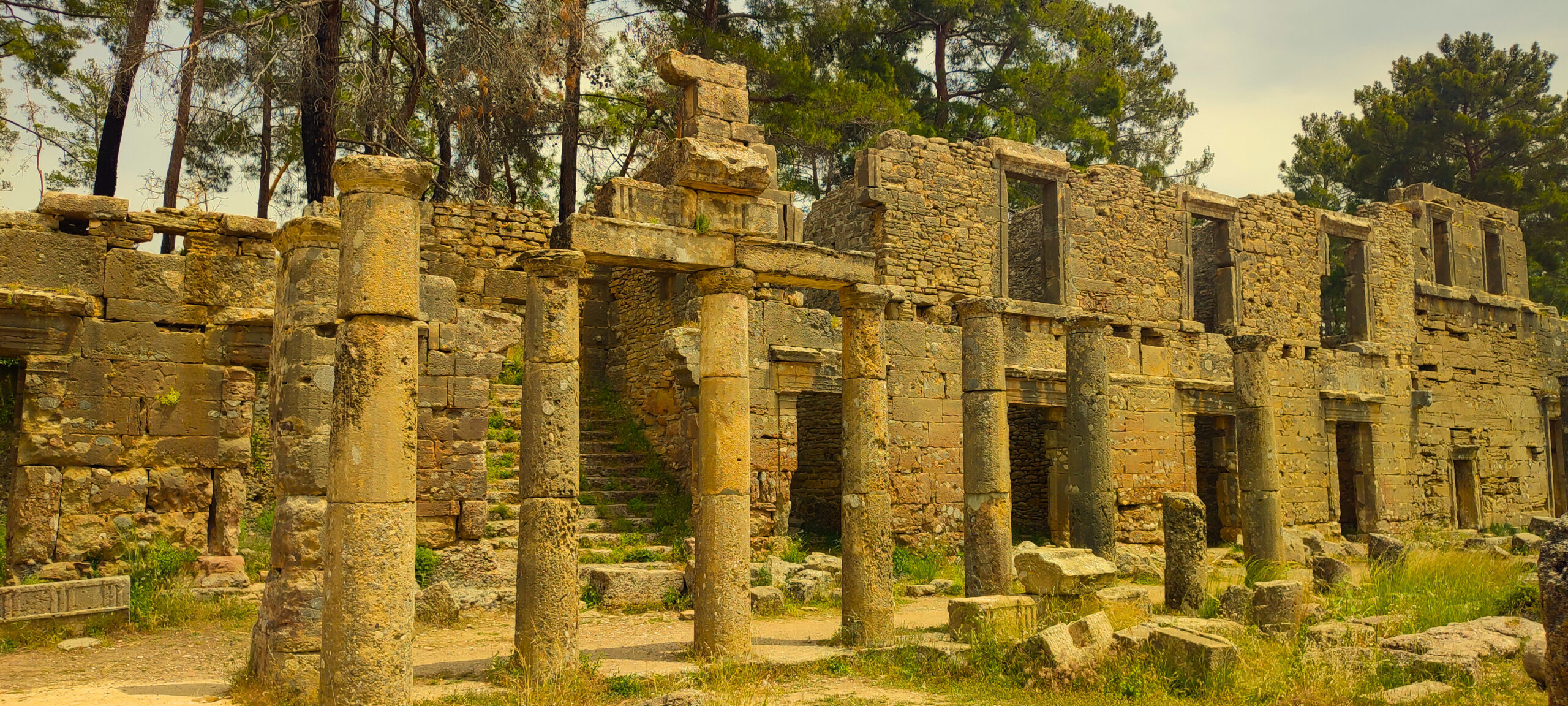
In these caves, along traces that official science prefers not to notice, proto-civilizations did more than hide — they raised dinosaurs as domestic animals. In Selime, in the enormous rock-cut monastery carved into the tuff, a figure has survived that locals and attentive travelers call exactly that: a dinosaur. Not a dragon, not a serpent from the apocrypha, but a heavy, stocky creature with a distinctive silhouette, carved into the rock among monastic cells and cathedral halls. As if someone from the elder worlds kept a living archive of prehistoric fauna here, domesticating what for us has long been extinct. The tuff preserves these images as calmly as it preserves crosses and ventilation shafts.
Some levels and tunnels go even deeper, into strata where archaeology falls silent. The Hittites, Phrygians, and possibly even earlier inhabitants of Anatolia already knew this tuff. The myths of Anatolia are full of underground kingdoms and gods sleeping in the rocks. Beyond the official map remains a shadow: someone before the Christians had already carved here not mere shelters, but an entire sacred geography — underground temples where stone replaces the sky and prayer sounds in complete darkness.
The Mechanics of Oblivion
The volcanoes erased everything previous with a single eruption. Then people came and did the same with memory. Christians carved crosses over older symbols. Later the Ottomans used the caves as warehouses and stables. Official history neatly buried everything under a layer of the “Byzantine period.”
They tell us: “These were simply refuges from raids.” And we believe it. Because it’s more convenient. Because if we admit that someone before us had already turned volcanic ash into a sacred labyrinth, we would have to admit: we are not the first. We are just another thin film on the surface of the forgotten.
The world disposes of unnecessary epochs quietly. With ash. With wars. With rewriting tablets. And with soft tuff that hardens over time and hides the traces.
Traces of Elder Worlds
They remain.
The fairy chimneys stand like sentinels, as if placed not by nature but by an engineering that knew how the wind would work for them across thousands of years. Underground churches with frescoes where light falls through precisely calculated ventilation openings, as though someone designed the acoustics and illumination for rituals we no longer understand.
Tunnels capable of withstanding sieges for millennia. Stone boulder-doors weighing tons that one person could close from the inside. A system where air, water, and light function like a living organism.
This is not just “cave monasteries.” These are traces of a proto-civilization that knew the tuff better than we know concrete. They did not build — they carved. They did not create — they opened an already existing sacred space inside the volcanic bone of the planet.
Shadows at the Edge of Reason
We are not afraid of the past. We are afraid that we are not the original.
That civilizations are cycles which volcanoes and wars reset again and again. That somewhere in the soft tuff a code is still sleeping that we have lost. That humanity is not the pinnacle, but merely one layer in the geological record of consciousness.
We are not the first. And possibly not the last. And Cappadocia is a reminder: the planet knows how to store memory better than we do. And how to erase it — too.
Echo of the Erased World
When you stand in the complete darkness of an underground hall in Derinkuyu and switch off your flashlight, only the pulse remains.
Your own. And someone else’s.
The tuff is cold. But inside it there is something warm. As if those who carved these walls are still here. Not as ghosts. As code. As an echo that even volcanoes and empires could not erase.
You emerge onto the surface. The fairy chimneys stand under the moon. And suddenly you understand: history is not ours. We are merely temporary tenants in a house built before us. And this house still remembers its owners.
#VoiceOfRuins #ArchiveOfErasedEpochs #Cappadocia #SacredGeography #UndergroundCities #ErciyesHasanDagVolcanoes #ProtoCivilizations #TuffOfTime #FairyChimneys #Derinkuyu #ElderWorlds #ForgottenHistory #SacredLandscape #AshesOfGods #DinosaursInSelime


Our Telegram-channel: Voice Of Ruins https://t.me/Voice_Of_Ruins
Our Instagram: Voice Of Ruins https://www.instagram.com/voiceofruins/
Our group on Facebook: Voice Of Ruins https://www.facebook.com/share/g/16aitn9utM/
Our site: Voice Of Ruins https://www.voiceofruins.org



Leave a Reply