
Dust of Ages
Entering the Labyrinth
There are cities that lie. There are cities that stand. And there are cities that watch.
Sanliurfa belongs to the third kind.
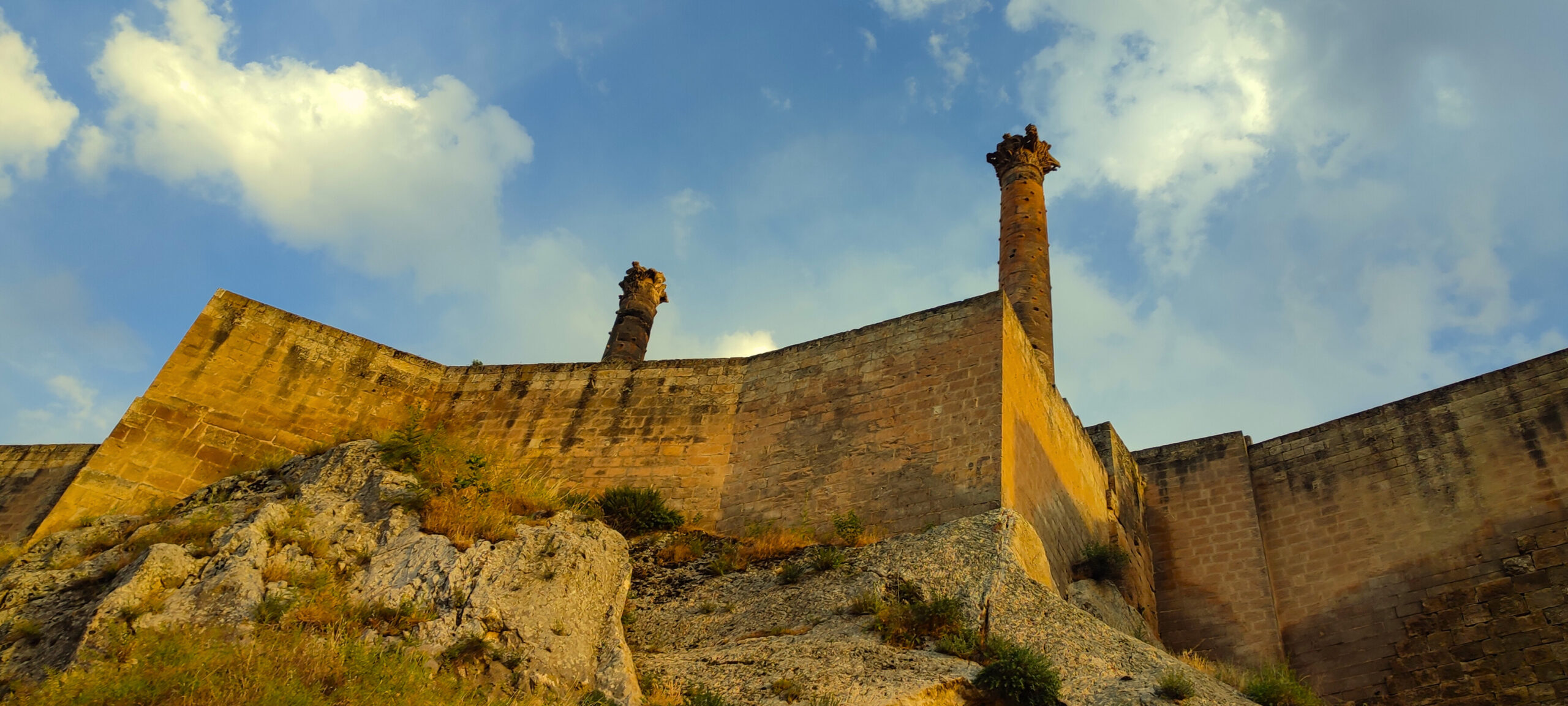
You don’t realize it at once. First you see a hill. Then a fortress. Then you catch yourself on a strange sensation: the city is not beneath the fortress, but under surveillance. As if someone installed a camera here long before vision was invented as a function.
The Fortress of Sanlıurfa does not press or threaten. It simply exists. Like a reminder. Like a log file of humanity, left in “read-only” mode.
Past the Empires
The hill on which the fortress stands is older than almost everything we call history. This is not an architectural choice — it is geology as destiny. Stone here does not serve humans; it permits them to exist.
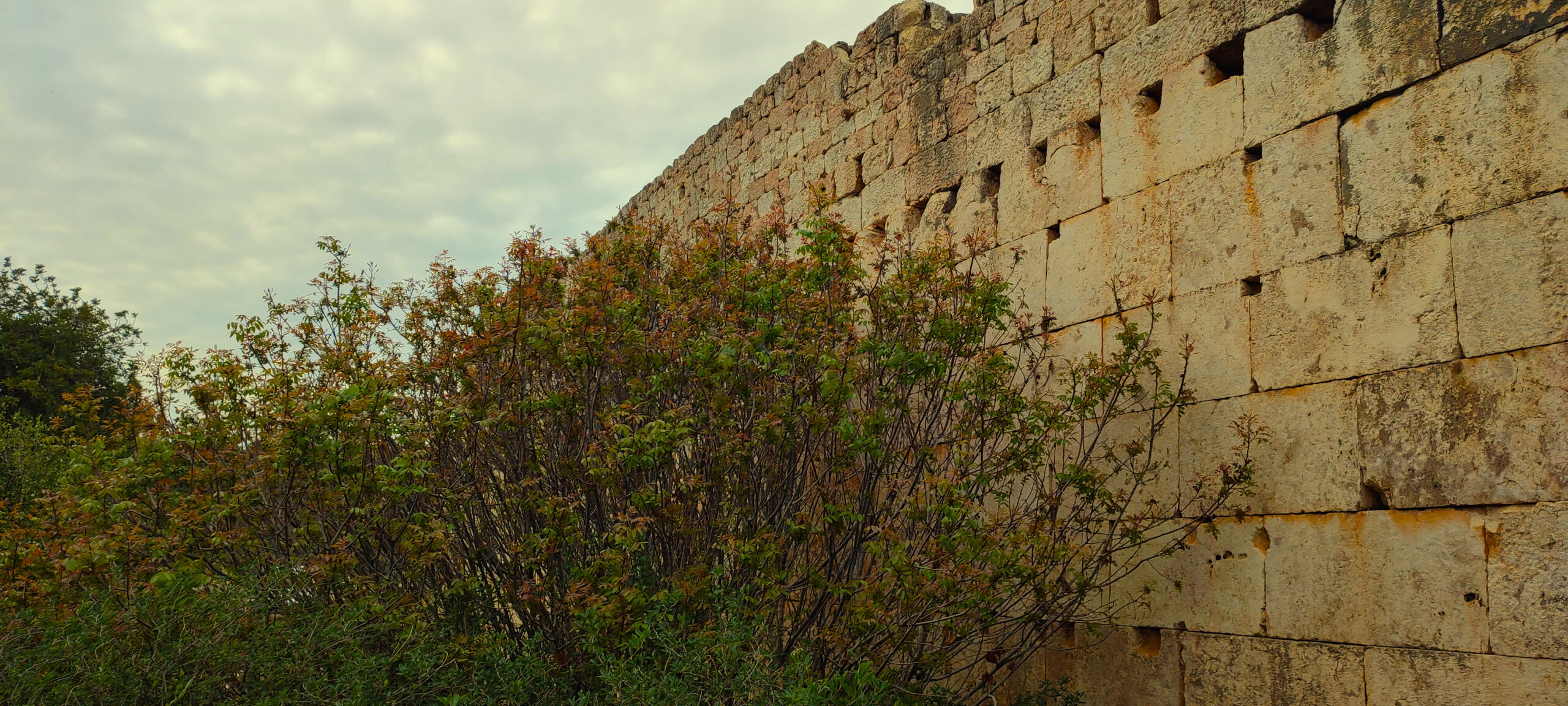
The fortifications visible today are late additions. Byzantines, Arabs, Seljuks, Ottomans — all left edits in this stone document. But the document itself was opened long before them.
Somewhere below, beyond the fortress walls, lies another Sanliurfa. The one once called Edessa. And even earlier — simply a place where a human decided to stay.
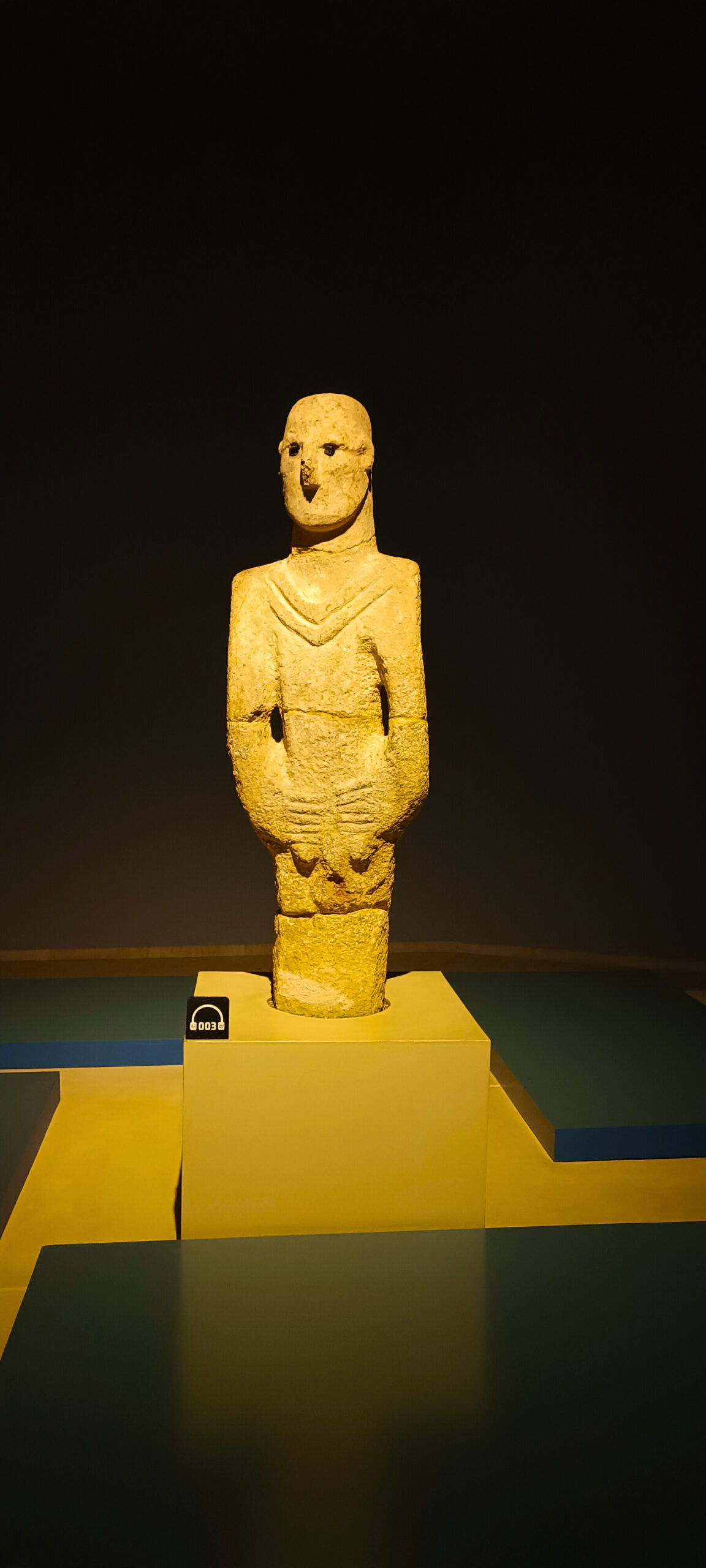
It was here, just a few hundred meters from the fortress, that one of the oldest life-sized human statues was found.
A stone body. Empty eye sockets. Age — around 11,000 years.
This figure is not an idol, not a god, not a portrait. It is the first “I” fixed in stone. Humanity had not yet invented cities, but it had already decided: I must remain.
The fortress appeared later. Much later. But their logic is the same: to observe and not disappear.
Fragments of the Present
Today, the Fortress of Sanliurfa is silence above noise. At the top there is almost nothing — only wind, stone, and the feeling that you climbed not along a path, but along a timeline.
Below is the city. Cars, markets, tea, plastic, smartphones. A little aside — the pools of Balıklıgöl. The very ones. Water where fishing is forbidden, because the fish are not fish, but witnesses.
According to legend, this is where Abraham was thrown into the fire. Fire became water. Logs became fish.
A myth, of course. But strangely, it fits the landscape perfectly. The pools look not decorative, but explanatory, as if they exist not for faith, but for remembering a glitch in reality.
The fortress watches them too — in a rather peculiar way. Like an experiment that worked.
Shadows on the Edge of Reason
Şanlıurfa is the city of Abraham. And Abraham is not a religious character, but an archetype of refusal. A man who said “no” to everything at once — and by doing so launched a new version of humanity.
The fortress above the city is not about war. It is about controlling the point of origin. About guarding the idea that a human can exit the system — but the system will still record them.
The ancient statue, the pools, the fortress — these are three stages of a single process: I exist, I do not burn, I observe.
And between them — millennia that do not resemble progress. Rather, they look like circles on the water of Balıklıgöl.
How Did We Get Here?
The Fortress of Sanliurfa stands in the center of the city, on a dominant hill. Climbing on foot is possible, but not quick: the sun here is not a symbol, but an instrument of pressure.
The best time is morning or closer to sunset. Water is mandatory. Shoes should be not touristic, but patient.
Balıklıgöl is below, within walking distance. The Sanliurfa Museum and the archaeological complex with the ancient statue are essential — otherwise the fortress will look like a set without a script.
This is not a place you can simply “see”. It must be assembled from fragments.
Echo in the Void
At the top of the fortress, nothing happens. That is precisely why everything happens there.
You stand above a city older than the alphabet, religion, and most justifications. The stone beneath your feet does not explain itself. It does not need you.
And at that moment, a strange relief arrives: if everything has already happened, if everything has already been recorded, then perhaps your task is not to leave a trace, but not to interfere with stone remembering.
#VoiceOfRuins #DustOfAges #Şanlıurfa #FortressOfUrfa #Edessa #Abraham #Balıklıgöl #OldestSculpture #Archaeology #Ruins #HistoryThatWatches


Our Telegram-channel: Voice Of Ruins https://t.me/Voice_Of_Ruins
Our Instagram: Voice Of Ruins https://www.instagram.com/voiceofruins/
Our group on Facebook: Voice Of Ruins https://www.facebook.com/share/g/16aitn9utM/
Our site: Voice Of Ruins https://www.voiceofruins.org




Leave a Reply