

Dust of Ages
Entrance to the Labyrinth
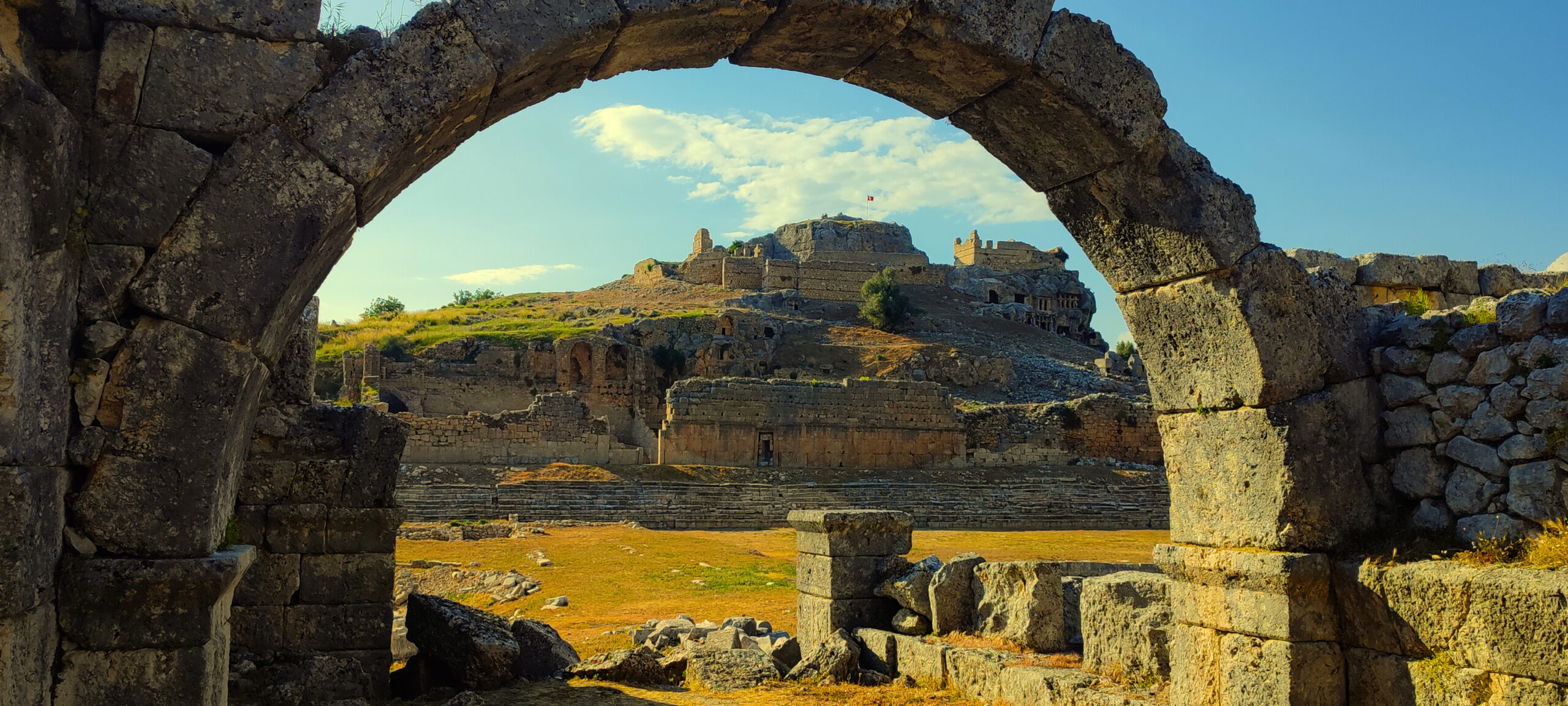
You step out of the car onto a dirt track where asphalt long ago surrendered to dust and tires. The wind from the canyon hits your face as if someone long dead decided to remind you: you are a stranger here. Before you are not just stones. These are megaliths, fitted so tightly that you couldn’t slip a razor blade between them. Polygonal masonry stretches up the slope for almost a kilometer — enormous multi-sided blocks, cyclopean walls, monolithic doorways carved as if by a laser from another dimension.
Meydan Kalesi doesn’t welcome you. It watches. It watches as though it knows all your weaknesses, all the empires you consider eternal, and all your gadgets that in a thousand years will be dust beneath these same stones. There are no “do not touch” signs here, no guards, not even a proper path. Step inside — and reality starts to crack.
Past the Empires
Meydan Kalesi (Meydankale) lies 28 km northeast of Silifke, in the mountains of Mersin, in the heart of historic Rough Cilicia (Cilicia Trachea). Officially, the settlement emerged in the Hellenistic period — roughly the 3rd–2nd centuries BCE, the time of the Seleucids, when this land was a frontier between East and West. But the megaliths remain silent about the exact date.
The main material is local limestone and basalt from the Taurus Mountains. The blocks weigh tons, some 5–10 tons each, fitted without mortar, with perfect joints, numerous faces, and sometimes bulging bosses from later repairs. This is classic Seleucid polygonal masonry — but at Meydan it reaches an almost absurd level of perfection. The walls run along the ridge, curving around a natural canyon from the east — here nature did half the work for the builders.
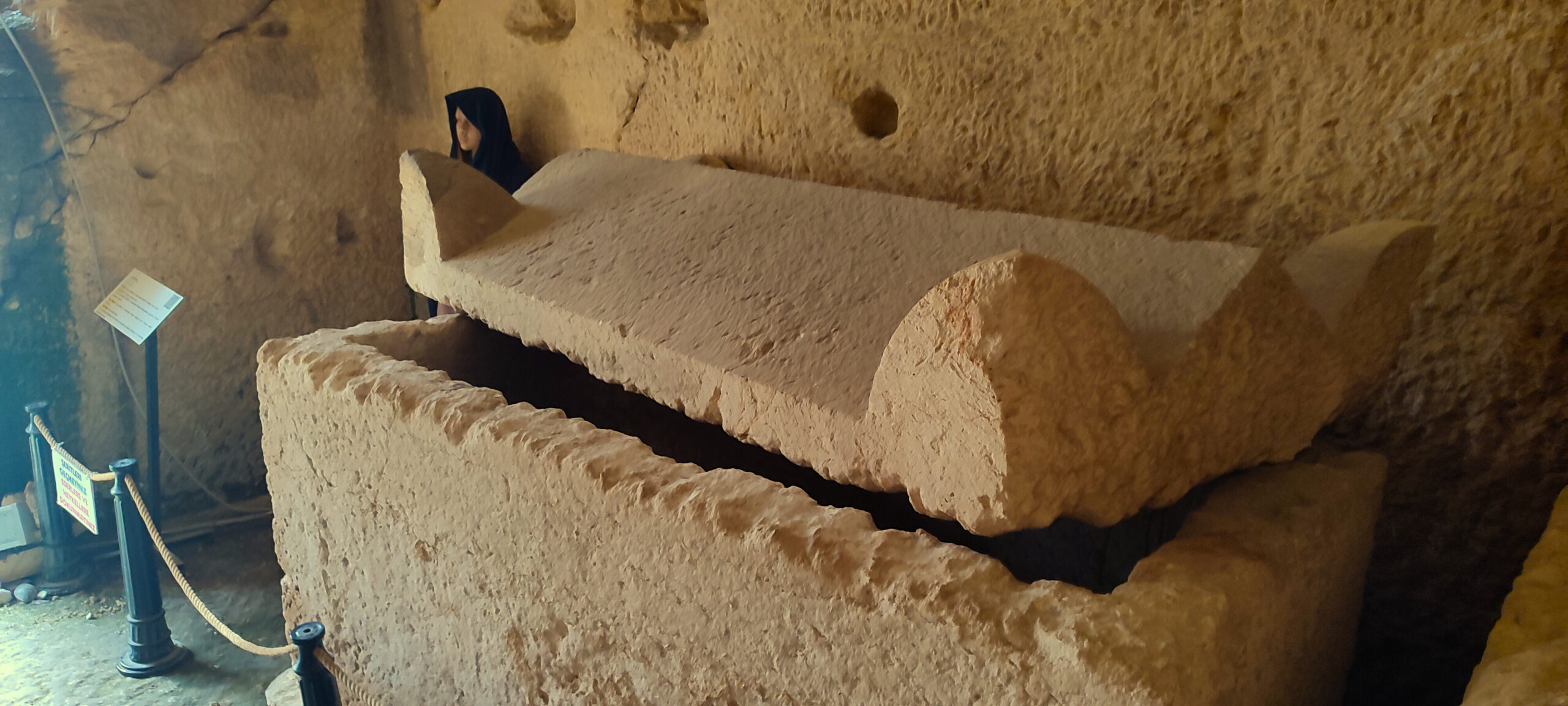
There were towers, gates, cisterns (sarnıç) holding thousands of liters, stairways down to the river below. The necropolis — rock-cut hypogea, sarcophagi, 3D reliefs. The monolithic doorways recall Tiwanaku or Sacsayhuamán — the same angles, the same precision. The Romans added their layers, the Byzantines reinforced it, the Armenian kings of the Cilician Kingdom (11th–14th centuries) used it as a mountain outpost on the passes.
But the first, megalithic phase is an enigma. Who dragged these boulders without wheels or cranes? Who cut them with such accuracy that after 2300 years the joints still don’t let water through? Official archaeology says: “Seleucids, Hellenistic engineering.” The stones reply with silence — and mockery.
Fragments of the Present
Today Meydan Kalesi is not a museum. It is a wild place where nature slowly devours human creation (though perhaps not entirely human). The walls are crumbling, earthquake cracks gape like wounds. Grass and bushes push through the polygonal joints — a reminder that entropy always wins. No tickets, no attendants, no café. Only dust, sun, and the risk of tumbling into the canyon if you lose focus.
The necropolis stands empty — the tombs looted centuries ago, yet the echo of your footsteps inside sounds as though someone is still breathing. The cisterns are dry, but their sheer volume still impresses. From the top, the view opens onto valleys, mountains, and the distant sea — a panorama that takes your breath away and at the same time fills you with dread: how many eyes have already gazed from here at these same horizons and vanished?
The site is abandoned, but not dead. The stones still hold. They wait. Perhaps for the next earthquake. Perhaps for the next curious fool like you.
Shadows at the Edge of the Mind
Polygonal masonry is not just a technique. It is a code. A code that breaks our understanding of the past. Why do the same multi-faceted joints appear in Peru, Greece, Italy, Turkey — thousands of kilometers apart and supposedly unconnected? Why is the precision such that modern lasers and CNC machines can barely replicate it?
Here time folds into a loop. The past is not dead — it is watching. These walls are a mirror: look at them and you see how your own civilization, with all its servers and AI, will one day become exactly the same dust beneath new megaliths. The mysticism is not in ghosts. The mysticism is that the stones know the answers, and we do not. They stand, ignoring our datings, our theories, our drones and satellites. They simply exist. And that alone is enough to make your mind start cracking at the seams.
How to Get There
Fly to Mersin or Antalya, then take a bus, followed by a rental car in Silifke. From there — 28 km northeast toward İmamlı and Yenibahçe. The last couple of kilometers are a dirt road, rough in places but passable in a regular car (if you’re not afraid of scratches).
Park at the base — and hike up the slope for 10–15 minutes on foot. Bring: 3+ liters of water (summer +40 °C), trekking shoes (stones are slippery), hat, flashlight (tombs are dark), power bank. Don’t climb the walls without a rope — the drop is long. Best time: March–May or October–November.
Nearby — Uzuncaburç, Olba, Kızkalesi — an entire cluster of forgotten megaliths of Cilicia.
Echo in the Void
I stood on the edge of the wall, the sun burning my neck, the wind carrying centuries-old dust straight into my lungs. The polygonal blocks under my fingers were warm, alive — as if they were pulsing. Below, the canyon swallowed sound; above — silence in which you could hear time creaking.
I touched the joints where not even a hair could pass and felt: these are not ruins. This is a message. A message from those who knew how to make stone lie about time. I left there changed — with the taste of dust in my mouth and the feeling that somewhere in these mountains a code is still being written that we will never crack.
But I will return. Because the labyrinth is calling.
#VoiceOfRuins #DustOfAges #MeydanKalesi #Megaliths #PolygonalMasonry #Cilicia #AncientRuins #Archaeology #Mysticism #Turkey


Our Telegram-channel: Voice Of Ruins https://t.me/Voice_Of_Ruins
Our Instagram: Voice Of Ruins https://www.instagram.com/voiceofruins/
Our group on Facebook: Voice Of Ruins https://www.facebook.com/share/g/16aitn9utM/
Our site: Voice Of Ruins https://www.voiceofruins.org



Leave a Reply