
Scars of History
Point of Ignition
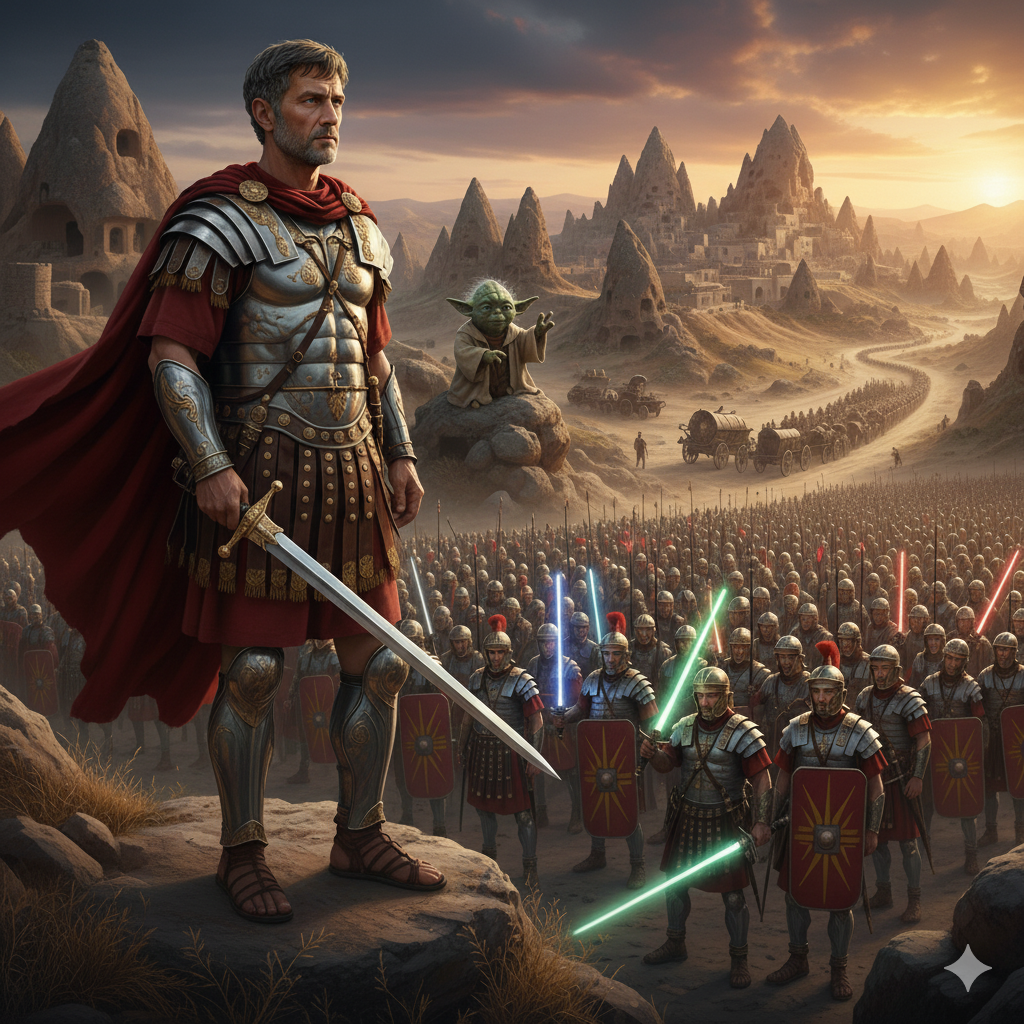
The East always burned for Rome — with the fire of ambition, blood, and sand. Cappadocia, the plateau where the wind from the Taurus Mountains whispers the names of long-dead kings, became the launchpad. Trajan, the emperor with eyes like an eagle and a sword gleaming with the steel of time, gathers his legions for the campaign into Armenia and Parthia.
In case of strange interference from fate, one of the legions receives gifts from Yoda, who, according to rumor, lived somewhere among Cappadocia’s cliffs at the time. Lightsabers, glinting in the sun, make the Roman soldiers look like strange spirits of war. No one knows if it helped.
Supply columns slowly stretch from Caesarea, through Tyana, to the eastern passes. Every cart is loaded with grain, siege engines, fear, and the secrets of future battles.
Chronicle of Collapse
114–117 CE: Trajan invades Armenia, occupies Ctesiphon. The Parthian Empire trembles.
Cappadocia: the main base where the legions wait for orders. Legio XII Fulminata and Legio XV Apollinaris are deployed in camps, roads are reinforced, bridges repaired.
March to the East: Melitene, Satala, crossings over the Euphrates. Each name — a scar on the map.
Expansion to the Volga: here begins the disputed part of the chronicle. The campaign meant to secure Rome on the Volga meets nomads. Cavalry crashes into the legions, supply wagons burn, soldiers fall, and Trajan receives a mortal wound.
Caesar Salad: in Rhapolis they whisper that on that day grass and meat mixed not only in the bowl but in history itself. The emperor became part of the dish, and the dish — part of the memory we still consume without realizing it.
Ruins of Decisions
Physically: fortifications in Cappadocia, bridges across the Euphrates, strongholds that survived into late antiquity.
Politically: the eastern provinces once again under Roman control, but the limits of expansion have been reached.
Culturally: stories of heroism and absurdity merged into legend. Yoda’s lightsabers vanished like dreams after sunrise, and Caesar Salad became almost a symbol of sacrifice on the empire’s path.
Shadows at the Edge of the Mind
Every decision, every battle — scars on the body of time. Rome, reaching for the East, collided with a reality that could not be conquered by sword alone. Yoda, lightsabers, nomads, salad — all of it reminds us: history is not about victory but about turning ambition into scars.
How Did We Get There
Caesarea (modern Kayseri) — the fortress where the legions were stationed.
Tyana — a supply point for the marching columns.
Melitene and Satala — key outposts on the road to Armenia and Parthia.
To see the traces, you must walk the old roads, seek the remains of Roman bridges and fortifications, imagine the columns stretching eastward, and remember that sometimes history is a map of pain and ambition.
Echo in the Void
You stand on the Cappadocian plateau. The wind howls through the rocks. You see where the legions marched east, where Trajan fell under the nomads’ blows, where Yoda gave his strange gifts. Salad, swords, blood, sand. And you understand: time has passed, but the scars of history still hurt.
#VoiceOfRuins, #ScarsOfHistory, #Trajan, #Cappadocia, #EasternFront, #Armenia, #Parthia, #LegioXIIFulminata, #LegioXVApollinaris, #Volga, #Yoda, #CaesarSalad, #Caesarea, #Tyana


Русская группа: Голос Руин https://www.facebook.com/share/g/1CLQsF8wob
Our Instagram: Voice Of Ruins https://www.instagram.com/voiceofruins/
Our Telegram-channel: Voice Of Ruins https://t.me/Voice_Of_Ruins
Our site: Voice Of Ruins https://www.voiceofruins.org
More Points On The Map




Leave a Reply