
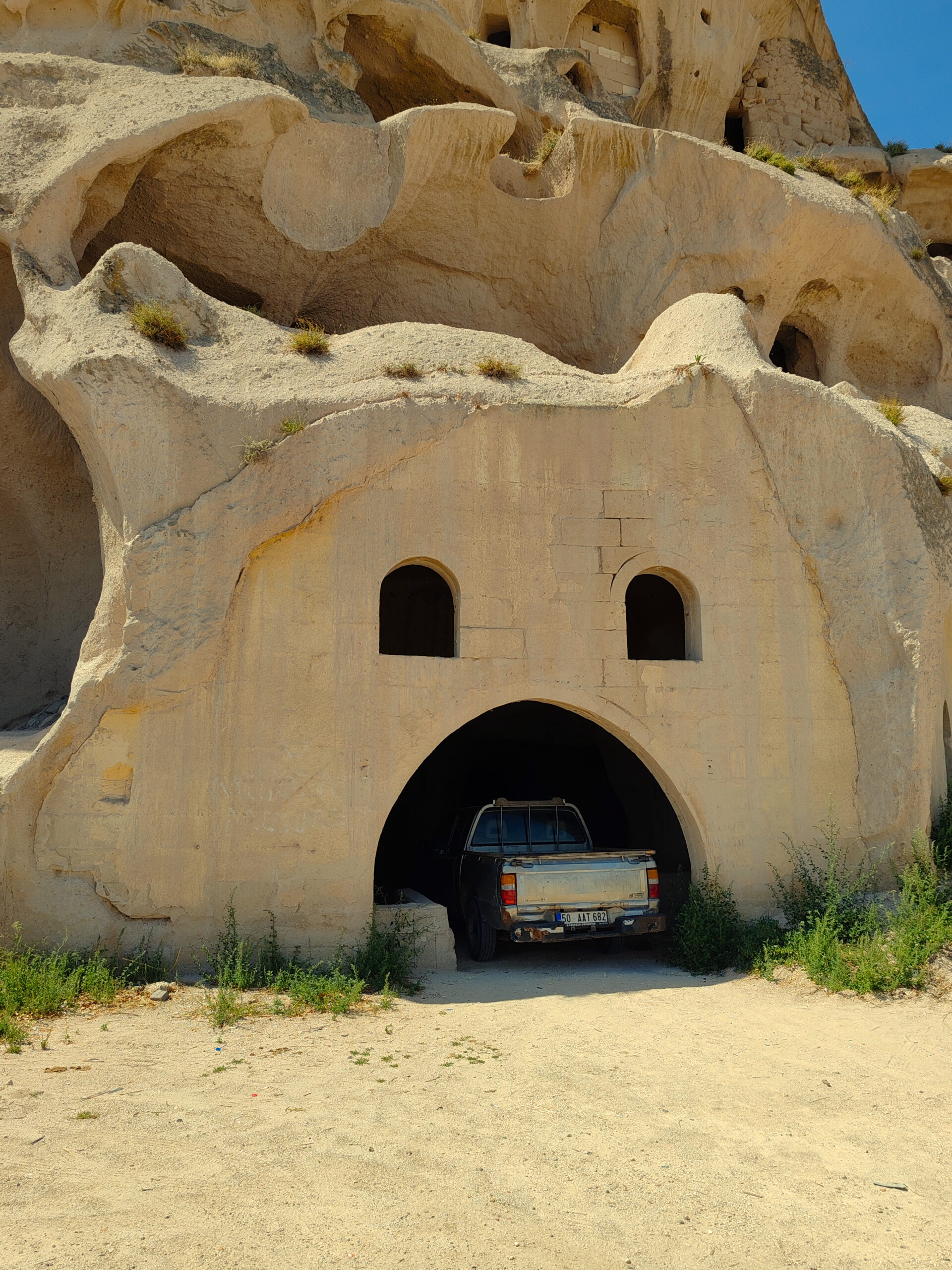
Uçhisar is a place where verticality becomes a way of thinking. A rock born from volcanic tuff, it long ago stopped being just a geological formation: it turned into a multi-storey container for human traces, forgotten rituals, and the debris of vanished eras. Here, memory doesn’t lie in flat layers — it climbs upward, as if trying to escape the earth that has witnessed too much.
When you move closer, you realize that Uçhisar is not a fortress in the usual sense. It is a necropolis of time: every niche and chamber is not merely a room, but a capsule where past ages stored their final breaths. Dead pottery, dim soot marks from oil lamps, worn thresholds, fragments of stone troughs — everything looks like a museum that buried itself to avoid explanations.
Archaeologists find in Uçhisar the traces of residents, refugees, monks, guards, craftsmen — all those who tried to hide their lives within this rock from the empires rumbling below. The countless dovecotes carved into the outer walls speak of another layer of history — the Seljuk agro-engineering system, when pigeon guano was a resource no less valuable than gold. Even now the surrounding valleys remember it: the soil there feels fertile in a way that suggests it absorbs not seeds, but memories.
Inside the fortress are rooms no one enters anymore: too narrow, too ruined, too honest. The collapsed plaster lies like ash left from thoughts that didn’t survive. Other chambers preserve the outlines of ancient floors — evidence that once there were entire multi-level living complexes here, a kind of vertical city long before the term became futuristic.
Yet Uçhisar is not a ruin in the ordinary sense. There is no feeling of death here — only storage. It’s as if the rock is waiting for the next epochal glitch to unlock another level of memory. Climbing upward, you pass doorways leading into a past that no longer needs people, but still needs an observer.
From the summit you see the Göreme and Pigeon Valleys shaping themselves into a landscape that resembles a map of a nervous system. The hot-air balloons rising in the morning look like random impulses. And the wind striking the ledges sounds like the breathing of eras still undecided whether to return or continue dissolving.
Uçhisar is a place where memory does not lie down. It hangs. It stands. It climbs. And the longer you remain at the top, the clearer it becomes: everything we call “history” is just an attempt to hold on to the slope of geological eternity.
And when you descend back into the village, you feel as though you’ve walked along the spine of Cappadocia. And that sensation stays in your body longer than any photograph stays in your phone.
#VoiceOfRuins #DustOfAges #Uchisar #VerticalNecropolisOfMemory #Cappadocia #archaeology #history #ruins #ancientcities #tuff #fortresses #geology #memory #Turkey #travel #Necropolis


Our Telegram-channel: Voice Of Ruins https://t.me/Voice_Of_Ruins
Our Instagram: Voice Of Ruins https://www.instagram.com/voiceofruins/
Our group on Facebook: Voice Of Ruins https://www.facebook.com/share/g/16aitn9utM/
Our site: Voice Of Ruins https://www.voiceofruins.org




Leave a Reply